AI Overviews vs Traditional SEO: What Actually Changed
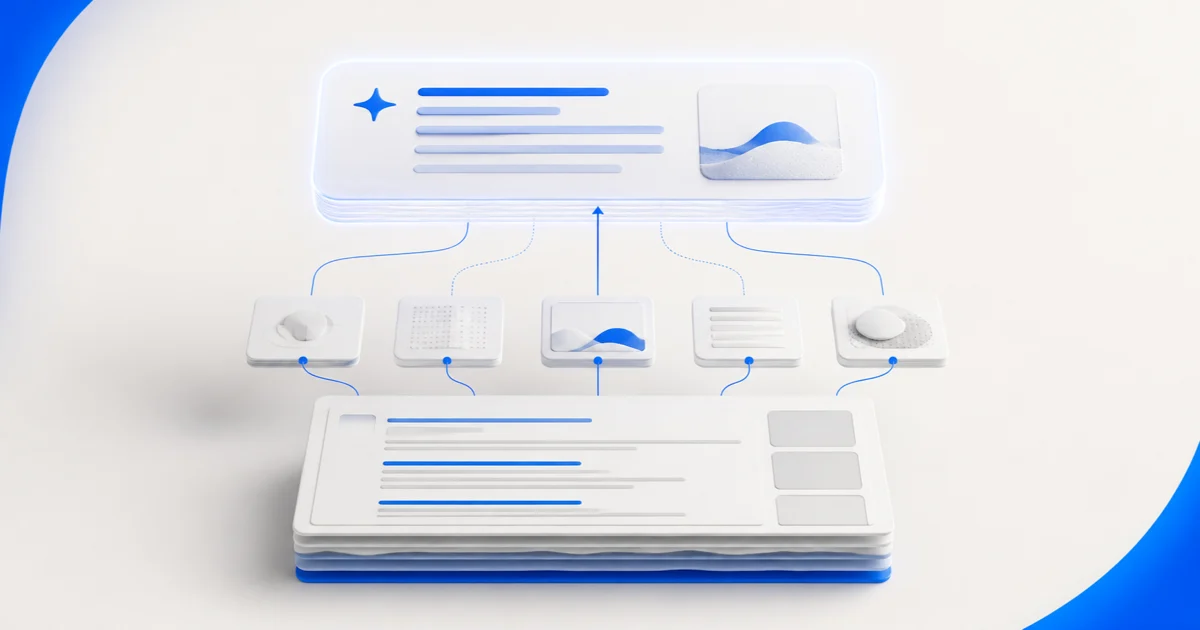
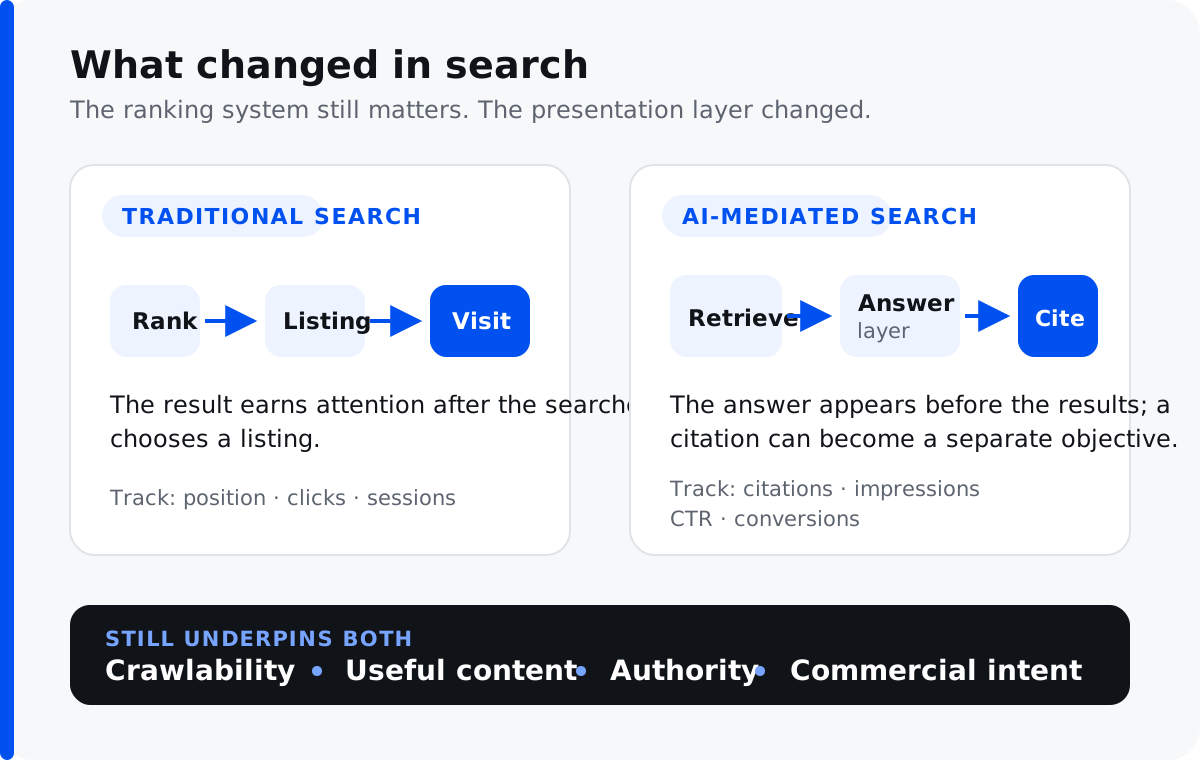
AI Overviews changed how answers are presented, not what earns them. The same signals still decide who gets surfaced — crawlability, content quality, authority — but a synthesised answer now sits above the results for many informational queries, which reduces clicks on those queries and shifts value toward being the cited source rather than merely the top-ranked link.
Setting the temperature correctly
Coverage of this topic has been unhelpful in both directions. One camp declared SEO dead, which it demonstrably is not. Another insisted nothing meaningful changed, which is complacent. Both positions are easier to write than an accurate assessment, which is that the impact is real, uneven, and highly dependent on what kind of business you run.
What follows is an attempt at the careful version. Some of it will be less dramatic than what you have read elsewhere.
What AI Overviews actually are
An AI Overview is a generated summary that appears above traditional results for certain queries, assembled from multiple sources and displaying links to some of them. It is not a separate index or a different ranking system — it draws substantially on pages that already perform well in conventional search.
That last point is the most important thing to understand, and it undercuts most of the "everything is different now" framing. If you rank well, you are considerably more likely to appear in an Overview. If you do not rank at all, you are unlikely to be included. The Overview is a presentation layer over largely familiar machinery.
What genuinely changed
Position one is worth less on affected queries
When a satisfactory answer appears above the results, fewer people scroll into them. The top organic position on an affected informational query no longer delivers the click-through it once did — the ranking is intact, the traffic is not.
This is the substantive change, and it is why "our rankings are stable" has become a misleading reassurance. Rankings and traffic have partially decoupled, and reporting that tracks only the former will show a healthy picture while the business feels a decline nobody can explain.
Zero-click behaviour extended further up the funnel
Zero-click searches are not new — Google has answered simple factual queries directly for years. What changed is the complexity of question that can now be resolved without a click. Queries that previously required reading an article can be satisfied by a synthesised paragraph.
The practical implication is that informational content at the top of the funnel absorbs most of the impact, while commercial and transactional queries are far less affected. Someone deciding which agency to hire, which product to buy, or where to book still clicks.
Being cited became a distinct objective
Previously there was one goal: rank. Now there are two related ones — rank, and be the source the summary draws from. They overlap heavily but they are not identical, and the second rewards content structured for extraction in ways the first did not particularly care about.
What did not change
Rather more than the coverage suggests.
Technical foundations still gate everything. Pages that cannot be crawled, rendered or indexed are not candidates for anything, Overview included. Our technical SEO checklist covers work that has, if anything, become more important.
Authority still decides who gets surfaced. Established, corroborated sources are favoured for inclusion. The off-page work that built rankings builds Overview presence too.
Content quality still determines outcomes. Thorough, genuinely useful content outperforms thin content, exactly as before.
Commercial queries still send traffic. The searches closest to a purchase decision are the least disrupted, which is fortunate given they are also the ones that generate revenue.
Google's own position is that optimising for its AI experiences is fundamentally the same work as optimising for Search. That is a self-interested statement, but on the evidence it is broadly accurate — and it is a more reliable guide than agencies with a new service line to sell.
Which queries trigger AI answers
The pattern is reasonably consistent. Overviews appear most often on informational queries — definitions, explanations, comparisons, how-to questions, anything phrased conversationally or as a full question.
They appear less often on navigational queries where someone wants a specific site, on transactional queries with clear purchase intent, on queries where results change constantly, and on topics where a wrong answer carries real consequence. Sensitive areas relating to health, finance and safety receive noticeably more caution.
Local queries occupy a middle position: Overviews may summarise, but map results and business listings retain prominence because they answer the underlying need better than prose.
The practical exercise is straightforward. Take your twenty most valuable queries, search each one, and note which return an Overview. That tells you your actual exposure far better than any published statistic, because it is measured on your terms rather than an aggregate.
The traffic question, answered honestly
You will encounter dramatic figures about traffic loss. Treat them cautiously — impact varies enormously by industry, query mix and content type, and many circulating numbers come from studies with narrow samples or methodologies that are not disclosed.
What can be said with reasonable confidence is directional. Sites whose traffic is dominated by top-of-funnel informational content have been most affected. Sites weighted toward commercial and transactional queries have been least affected. Publishers relying on broad informational search have had the hardest time; businesses whose traffic arrives on buying-intent queries have often seen little change.
There is also a quality effect worth noting. If fewer but more qualified visitors arrive — because those who wanted a quick fact got it without clicking — traffic falls while conversion rate rises. That looks alarming in a traffic report and may be commercially neutral or even positive. Checking conversion rate alongside sessions is the honest way to assess it.
What to actually change
Structure content for extraction
Put direct answers at the top of pages and sections. Use headings phrased as real questions. Write self-contained passages that make sense in isolation. Include specific, concrete facts rather than general claims.
None of this harms human readers. A reader who wanted a quick answer gets one; a reader who wanted depth reads on. It is one of the rare optimisations that improves the page for everybody.
Shift weight toward commercial content
If your content strategy is heavily top-of-funnel, rebalance. Comparison pages, buying guides, pricing explanations and service pages face less Overview disruption and sit closer to revenue anyway. This is a reasonable adjustment on its own merits — plenty of businesses were over-invested in awareness content that never converted.
It does not mean abandoning informational content, which still builds authority and feeds AI citation. It means being clearer about which pieces exist to earn traffic and which exist to earn trust.
Change how you measure
Rank tracking alone has become misleading. Add impressions and click-through rate from Search Console, so you can see the gap where you hold a ranking but lose the click. Track conversion rate alongside sessions so a quality shift is not misread as a decline. And periodically check whether you appear in AI answers for your key questions, which no standard tool reports automatically.
Build brand and direct demand
The strategic hedge against intermediated discovery is being sought by name. If people search for your business specifically, no summary sits between you and them. Everything that builds recognition — content, social, email, genuine reputation — becomes more valuable as generic discovery becomes more mediated.
This is also why owned channels matter more than they did. An email list cannot be disintermediated by an algorithm change.
Should you block AI crawlers?
A genuine debate, and the answer depends on your business model rather than on principle.
Publishers whose revenue depends on page views have a real argument for restricting access, since a summary that satisfies the reader removes the impression their business depends on. Several large publishers have taken this position.
For most businesses selling products or services, blocking is likely counterproductive. Being absent from AI answers does not redirect that attention to you — it hands it to competitors who remained available. You lose visibility in a growing discovery surface and gain very little.
The honest framing is that this is a commercial decision about how your business converts attention, not a technical one. If your product is the content, restriction may be defensible. If your content markets a product, it probably is not.
How to audit your own exposure
Aggregate statistics tell you little about your situation. This exercise takes an afternoon and gives you an actual answer.
Step one: list your twenty most valuable queries. Not your highest-volume ones — the ones that produce enquiries or sales. Pull them from Search Console by filtering for pages that convert, or take them from what customers say they searched.
Step two: search each one and record what appears. Note whether an Overview appears, whether you are cited in it, and how far down the page the first traditional result sits. Use an incognito window so personalisation does not distort things.
Step three: pull the click-through data. In Search Console, compare impressions and clicks for those queries over the last twelve months. What you are looking for is the pattern where impressions hold steady or rise while clicks fall — that gap is Overview impact made visible, and it is the clearest evidence available to you.
Step four: segment by intent. Split your queries into informational and commercial. Calculate what proportion of your converting traffic comes from each. A business whose conversions come mostly from commercial queries has far less exposure than one dependent on informational traffic, regardless of what the headlines say.
Step five: check conversion rate alongside traffic. If sessions fell but conversion rate rose, you may have lost visitors who were never going to buy. That is a materially different situation from losing qualified traffic, and it changes what you should do about it.
The output is a straightforward picture: which of your valuable queries are affected, how much click-through you have lost on them, and whether the traffic you lost was worth anything. Most businesses find the reality is narrower and more specific than they feared.
What to do in the first thirty days
If the audit shows real exposure, there is a sensible order of operations.
Week one — measure properly. Set up reporting that separates impressions from clicks, and segments informational from commercial queries. You cannot manage what you are not seeing, and most analytics setups currently hide precisely this.
Week two — restructure your most exposed pages. Take the five affected pages that matter most commercially. Add a direct answer at the top, rewrite headings as questions, and make sure each section contains at least one specific, concrete statement. This is a few hours per page.
Week three — check your accuracy. Run your key questions through the major AI engines and note anything said about you that is wrong or outdated. Correcting the underlying sources is frequently the highest-value fix available, because inaccuracy actively harms you rather than merely failing to help.
Week four — rebalance the content plan. Look at what you were about to publish. If it is heavily top-of-funnel informational content on topics an Overview already answers, redirect that effort toward comparison, buying-guide and service content that sits closer to a decision.
None of this is dramatic and none of it requires a new discipline. It is careful application of things you were probably already meant to be doing.
Predictions worth ignoring
Several confident claims circulate that deserve scepticism.
"SEO is dead." Said after every significant search change for two decades. The work shifts; the discipline does not disappear. Content still has to be found, understood and trusted.
"Rankings no longer matter." They matter considerably, including for AI visibility, since Overviews draw heavily on pages that rank. What changed is that rankings alone no longer guarantee traffic.
"You need a completely separate GEO strategy." Mostly a repackaging of existing work. There are genuine additions — structuring for extraction, monitoring AI visibility — but framing them as a wholly separate discipline is usually a pricing decision rather than a technical one.
Specific percentage forecasts about future search behaviour. The industry has a poor record here. Voice search was going to be half of all searches by a date that passed uneventfully. Treat confident numbers about the future as marketing.
What this means depending on your business
Local service businesses are among the least affected. Map results retain prominence, and someone needing a plumber is not satisfied by a paragraph explaining what plumbers do. The local fundamentals remain the priority.
eCommerce is moderately affected. Product research is increasingly mediated, but transactional queries still convert through conventional results. The emerging concern is AI-assisted product discovery, where being cited in a recommendation matters.
B2B and considered services face a mixed picture. Early-stage research questions get absorbed; the later comparison and evaluation stages still involve clicking, reading and contacting. Content weighted toward those later stages holds up better.
Publishers and content-driven businesses face the most genuine disruption, because their commercial model depends on the click that a summary removes.
The reasonable conclusion
Search became more competitive at the top of the funnel and largely unchanged at the bottom. The businesses affected worst were those most dependent on broad informational traffic; the businesses affected least were those closest to commercial intent.
The correct response is neither panic nor complacency. It is to check your actual exposure, restructure content so it can be extracted, rebalance toward commercial queries, measure in a way that reveals the ranking-traffic gap, and invest in being known by name.
Most of that is work worth doing regardless of what happens to AI answers next — which is the most reliable test of whether advice is sound.
If you want to know where you specifically stand, our AI SEO service starts with a visibility benchmark across the major engines, and our SEO audit covers exposure alongside the technical and content picture. The companion piece to this article, how to get cited by ChatGPT and AI search, covers the tactical side in detail.
Google's documentation on AI features remains the authoritative source on how inclusion works.