How to Improve Your Local Rankings: A Practical Local SEO Guide
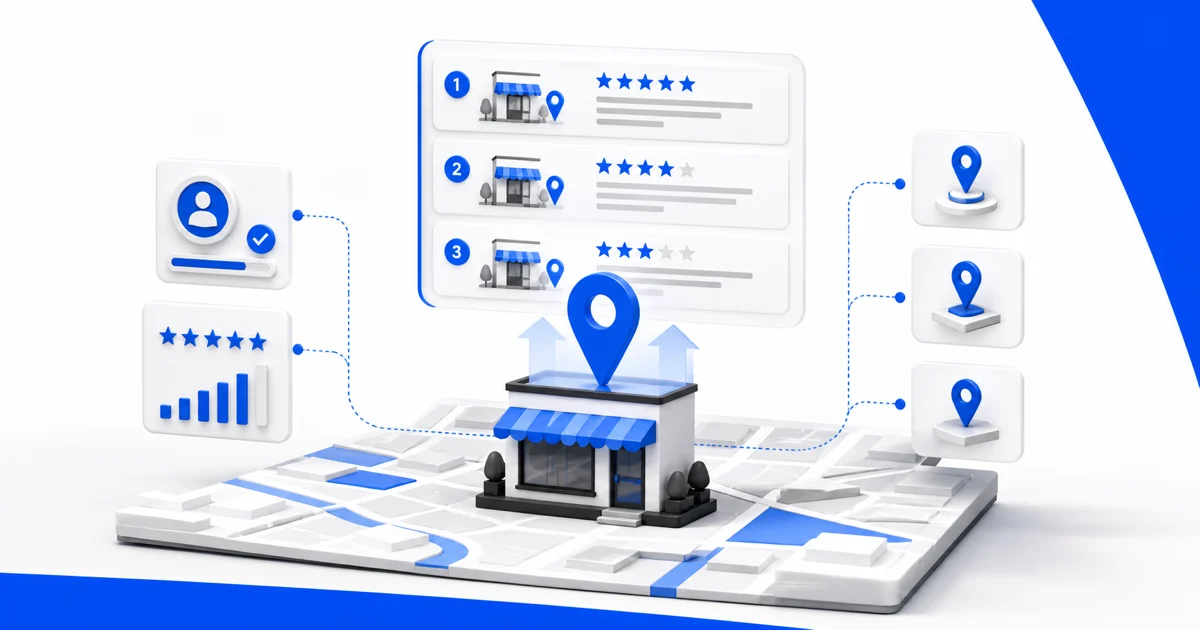
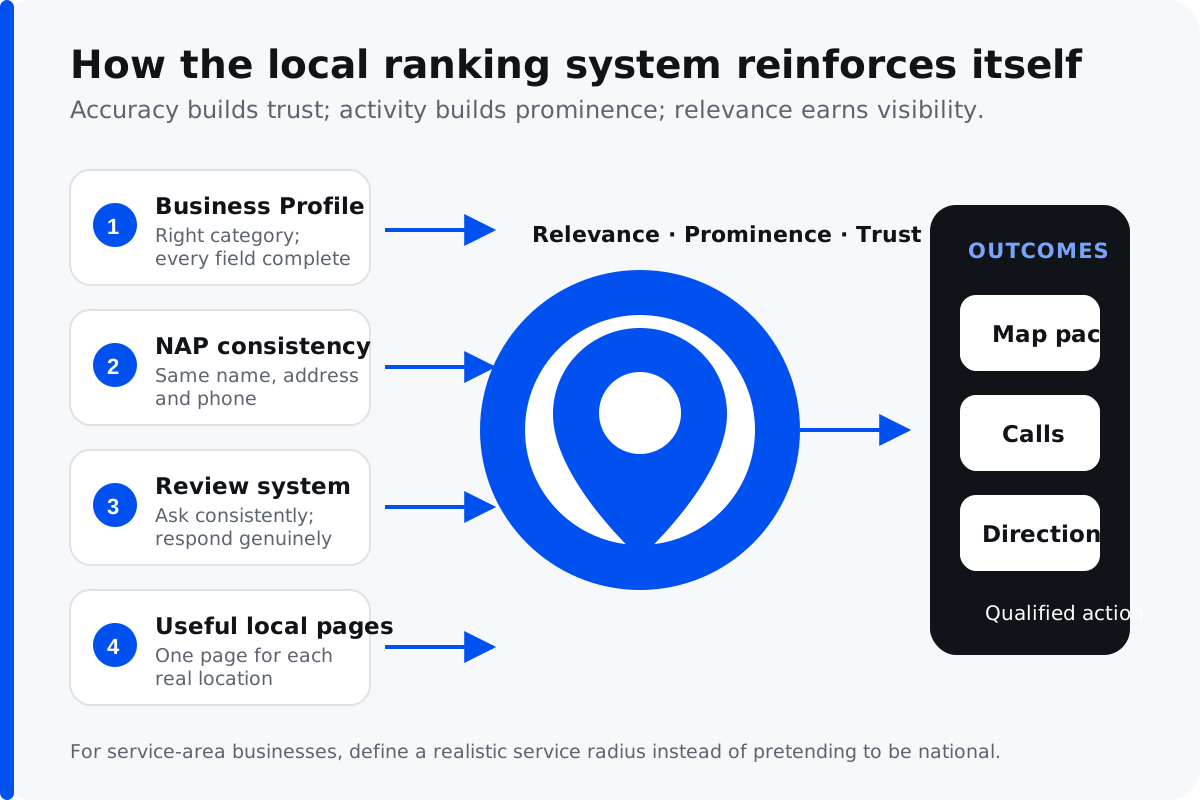
To improve your local rankings, optimise your Google Business Profile first — particularly the primary category — then make your business details consistent everywhere they appear online, build a steady flow of genuine reviews, and create pages that are actually about the areas you serve. Those four things, in that order, account for most of the movement you can control.
Why local search works differently
The map pack — the three business listings with a map above the normal results — is ranked by a separate system from the blue links beneath it. You can sit at position one organically and be entirely absent from the map pack, which is why businesses are often confused about whether their SEO is working.
Google describes three factors for local results: relevance, distance and prominence. Relevance is how well your business matches the search. Distance is how near you are to the searcher. Prominence is how well known and well regarded you are. You cannot influence distance much, which leaves relevance and prominence — and that is where the work goes.
Start with your Google Business Profile
Your profile matters more than your website for map pack visibility, which surprises most people. Treat it as a live asset rather than something you completed once.
Your primary category is the single most important setting
Of everything on the profile, the primary category carries the most weight for relevance. "Dentist" and "Cosmetic dentist" will surface for meaningfully different searches. Look at what the businesses ranking above you have selected — it is publicly visible — and be honest about which category actually describes your main service rather than the one that sounds most impressive.
Add secondary categories for genuine services you offer, but do not stuff them. Irrelevant categories dilute your relevance rather than expanding it.
Complete every field, then keep it current
Services, attributes, opening hours, description, and photographs. Profiles that are fully completed and regularly updated perform better than abandoned ones, and the photographs matter more than most businesses expect — they are frequently the first impression someone forms.
Google Posts are underused. They are a low-effort signal that the business is active, and they occupy space in your listing that competitors are leaving empty.
Fix your NAP consistency
Your name, address and phone number should be identical everywhere they appear — your website, directories, social profiles, industry listings. Variations confuse the picture: "Street" versus "St", an old phone number on a directory nobody has updated since 2019, a suite number that appears on some listings and not others.
Start by auditing what already exists. Search your business name and phone number and see what comes back. Duplicate listings are common after a business moves premises or changes name, and duplicates actively suppress each other. Getting them merged or removed is unglamorous work that frequently produces the clearest improvement.
Build reviews deliberately
Reviews influence both ranking and whether someone chooses you once they can see you. A business ranking third with two hundred reviews often gets more calls than the one ranking first with six — so this is a rare area where the effort improves two things at once.
The reliable approach is a system rather than sporadic asking. Request a review at the natural moment of satisfaction — job completed, order delivered, treatment finished — and make it a single tap rather than a task. Respond to everything, including the critical ones, because the response is read by prospective customers more carefully than the review itself.
Never buy reviews or incentivise positive ones. Beyond the platform policy violations, fake reviews are treated as deceptive advertising in most markets and enforcement has been increasing.
Create pages that earn their place
Location pages work when they are genuinely about serving that area — specific projects, local considerations, real photographs, an actual understanding of the place. They fail when they are the same page with the town name swapped, which search engines identify easily and treat as thin duplicate content.
If you serve fifteen towns, you probably cannot write fifteen genuinely useful pages, and attempting it usually does more harm than good. Write strong pages for the areas that matter most commercially and let broader service pages cover the rest.
Service-area businesses work differently from storefronts
If customers visit your premises, you display an address and Google weighs proximity to the searcher heavily. If you travel to customers — trades, mobile services, consultants — you are a service-area business, and the rules change.
Service-area businesses hide their address and define the areas they cover instead. The mistake most make is defining an unrealistically large area, on the reasoning that wider coverage means more visibility. It does not work that way: an enormous service area dilutes your relevance to any specific place, and you end up ranking well nowhere. Defining a realistic radius around where you are actually based produces better results than claiming half the country.
Getting the setup wrong here is also one of the more common causes of suspended profiles. Listing a residential address publicly when you should be a service-area business, or using a virtual office you do not staff, both breach the guidelines and the suspension usually arrives without warning.
If you have multiple locations
Each location needs its own profile, its own page on your website, and enough genuinely distinct content that the pages are not competing with each other. The common failure is a template page duplicated across twelve branches with only the town name changed — which search engines treat as thin content and rank accordingly.
Link each profile to its specific location page rather than to your homepage. It is a small detail that many multi-location businesses miss, and it directs both users and search engines to the most relevant destination.
Local keyword research and local content
Local SEO still runs on keywords — just local ones. A local keyword pairs a service with a place: "emergency plumber Leeds", "family dentist near me", "wedding florist Cotswolds". These carry obvious local intent and convert well, because someone searching them is close to choosing. Build your keyword list from the services you actually offer crossed with the areas you genuinely serve, then check search volume so you focus on the terms real local customers use rather than the ones you assume they do.
Turn that list into local content. Service pages that name the area, answer the questions local searchers ask, and reference genuine local detail will rank for local keywords that a generic page never touches. Google Search Console then shows which local queries already bring you clicks and which pages are close to breaking into the local pack — the fastest place to focus improvement.
Local citations and business directories
A local citation is any mention of your business name, address and phone number on another site — business directories, industry listings, review platforms, local chambers of commerce. Citations reinforce the prominence and consistency signals behind local rankings, and they are a large part of why some competitors sit in the local pack and others do not.
The priorities are the major aggregators and the directories specific to your industry and area: Google Business Profile first, then the likes of Bing Places, Apple Maps, Yelp, Facebook and the trade directories your customers actually use. Consistency matters more than volume — the same name, address and phone number everywhere. Tools such as Moz Local, BrightLocal or Semrush's listing management can find inconsistent and duplicate citations across dozens of business directories at once, which turns an otherwise tedious cleanup into a manageable job. Fixing conflicting citations is frequently the single change that unblocks a stalled local SEO campaign.
How to know whether it is working
Standard rank tracking is misleading for local, because results vary by where the searcher is standing. A tool reporting you at position two may be measuring from a location nobody searches from. Local rank tracking that samples across a grid of points in your area gives a far more honest picture — you will often find you rank well near your premises and disappear a few miles out, which tells you exactly where the opportunity is.
Beyond rankings, the metrics worth watching are in your profile insights: calls, direction requests, website clicks and how people found you. Those connect more directly to revenue than position does, and they are harder to fool yourself with.
Do not neglect the technical foundations
Local searches skew heavily to mobile, often on poor connections, and frequently from people who need something urgently. A slow site quietly costs you calls at exactly the moment intent is highest. Local business schema, fast pages and a phone number that is tappable on mobile are basic requirements rather than refinements — see our guide to technical SEO fundamentals for the wider picture.
How long this takes
In a moderately competitive market, expect meaningful map pack movement within roughly 30 to 90 days once your profile, citations and review process are working properly. Competitive urban categories take considerably longer, because prominence compounds slowly and your competitors have a head start on reviews and links that cannot be shortcut.
Where to start tomorrow
Open your Google Business Profile and check the primary category. Search your business name and note every inconsistent listing. Then ask your three most recent happy customers for a review. Those three actions cost nothing and address the factors that matter most.
If you would rather have this handled properly — including the citation cleanup, which is tedious at scale — our local SEO for small businesses service covers the whole programme. For the broader picture of how local fits alongside organic search, start with our SEO services.
Google publishes its own summary of how local ranking works, which is worth reading directly: Improve your local ranking on Google.