
Have you ever wondered why some WordPress websites rank consistently on Google while others struggle even after publishing great content? The difference is often not content quality alone, but how well the site is optimized behind the scenes. WordPress is SEO-friendly by nature, but without the right plugins, you leave a massive amount of ranking potential untapped.
SEO plugins help WordPress users handle technical optimization, on-page SEO, performance improvements, schema markup, internal linking, and content optimization without needing advanced coding skills. In 2026, search engines will rely heavily on site structure, page experience, semantic relevance, and technical clarity. Using the right SEO plugins ensures your WordPress site meets these expectations.
This guide walks you through the 13 best WordPress SEO plugins that can significantly improve your site’s rankings, visibility, and organic traffic. Each plugin is explained in detail so you can understand what it does, why it matters, and when you should use it.
What is SEO in WordPress?
As an SEO expert advising WordPress users and website owners, I define WordPress SEO as the combination of technical SEO, on-page SEO, content strategy, and tooling that helps optimize your site and improve your ranking in the search engine results. A WordPress site benefits from SEO best practices such as structured data, fast performance, and mobile optimization to improve site visibility and improve user experience.
Core to implementation are WordPress plugins — notably a dedicated SEO plugin or WordPress SEO plugin like Yoast SEO, Yoast SEO premium, one SEO, or the best SEO plugin for WordPress. These tools for WordPress include an SEO writing assistant, content analysis tool, keyword research tool and seo settings that help you optimize your site. A free version of an seo plugin for WordPress covers essentials, while premium tiers and tools like Semrush or the Semrush SEO Writing Assistant provide comprehensive SEO analysis and a comprehensive SEO approach.
To boost your SEO and optimize your website, conduct an SEO audit to evaluate SEO factors, use the right tools, and follow best practices. For e-commerce, prioritize WooCommerceSEO. The best practice mix of SEO features, strategy, and a powerful tool or SEO plugin like the top options will help you optimize your site and attract organic traffic that SEO professionals and SEO experts expect.
Why SEO Matters in WordPress?
In WordPress, a comprehensive approach to SEO is critical because CMS flexibility demands a targeted SEO strategy and continuous monitoring with an appropriate SEO tool. From the WordPress dashboard, you can access WordPress SEO plugins and tools and configure SEO features that address site speed, schema, and on‑page signals—core SEO factors that SEO professionals prioritize to boost your SEO and improve SEO performance. Selecting the best WordPress SEO plugins or the best SEO plugin for WordPress—and comparing lists such as the 13 best WordPress SEO plugins or other 13 best curated sets—helps implement both essential SEO and advanced SEO tactics.
Practical implementation includes integrating a keyword research tool, a content analysis tool, or an SEO writing assistant, and auditing your WordPress theme for speed and markup compatibility. Whether you choose the best SEO plugins, SEO plugins for WordPress, or other tools for WordPress, following SEO best practices and the 13 ways to improve your site will measurably improve site visibility and climb SEO rankings among the top WordPress implementations.

How to Set up WordPress SEO Basics?
Begin by installing a WordPress plugin that covers core needs: a suite of SEO tools, such as access to Yoast seo or one of the top wordpress seo plugins. These plugins and tools for WordPress let you optimize your WordPress site and improve crawlability, meta tags, sitemaps, and schema. An seo plugin that combines analysis, redirect management, and an SEO writing assistant plugin or SEO writing assistant tool helps craft targeted website content that ranks better.
Next, enable local SEO features if relevant, and start using tools and analytics within your dashboard: within your WordPress dashboard, you can run audits and get recommendations. Choose from a list of the best and best WordPress plugins for SEO based on your site size; the popular WordPress options are often one of the best SEO picks. An expert pick of the best emphasizes tools on your side: SEO tools that provide actionable data. Let these plugins can help you improve your seo using both plugins also and human tools and the knowledge.
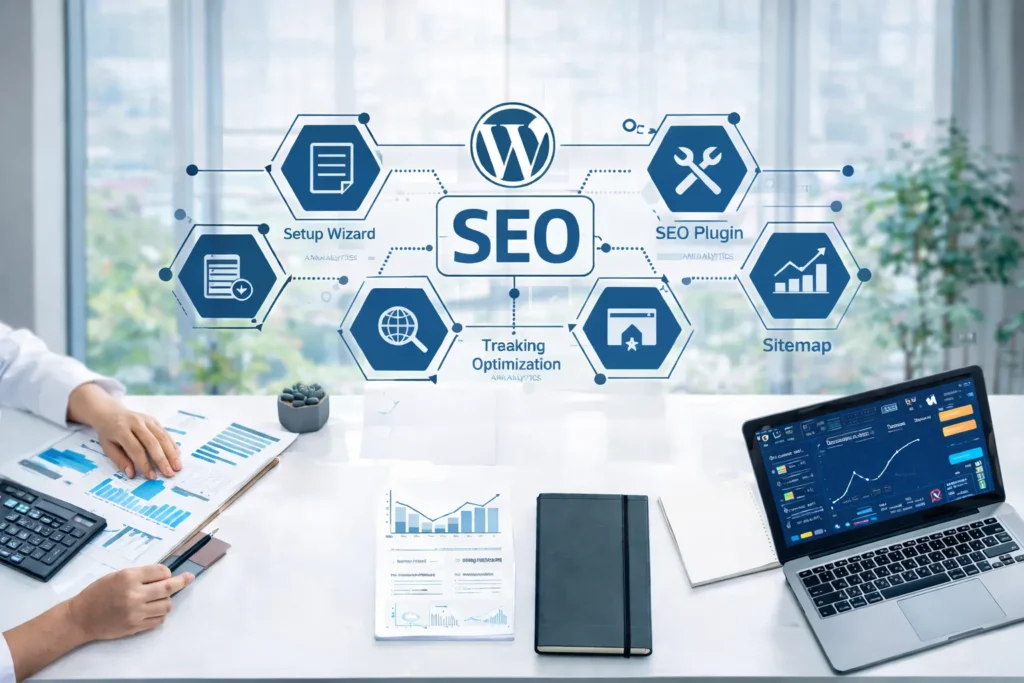
How to do On-Page Optimization With a WordPress SEO Plugin?
On-page optimization with a WordPress SEO plugin begins with a systematic audit of content, technical metadata, and site structure; configure the plugin to enforce canonical tags, XML sitemaps, and schema markup while validating hreflang and robots directives. Remember that seo plugins can help by automating title and meta-description templates, suggesting keyword placement, and providing readability and technical checks, but they are tools—expert oversight ensures alignment with user intent and conversion goals.
Implement granular controls for individual posts and taxonomies: optimize headings, image alt attributes, and internal linking, and leverage the plugin’s content analysis to tune keyword density and latent semantic keywords. Monitor performance with integrated analytics and iterate based on click-through and engagement metrics, recognizing that seo encompasses a broad set of practices spanning on-page, technical, and off-site efforts; a plugin optimizes on-page signals but must be part of a comprehensive SEO workflow to deliver sustained rankings and traffic growth.
How to Implement Technical SEO Strategies in WordPress?
Technical SEO implementation in WordPress begins with a robust foundation: install a performant SEO plugin, enforce SSL, create and submit an XML sitemap, and configure robots.txt to control crawler access. Audit and optimize site speed via caching, image compression, lazy loading, and a CDN, while minimizing render-blocking resources and leveraging server-level compression and HTTP/2.
Next, focus on crawlability and indexing by implementing proper canonical tags, avoiding thin or duplicate content, and using structured navigation to preserve your crawl budget. Add schema markup (structured data) for rich results, validate with testing tools, and ensure pages adhere to mobile-first indexing standards through responsive themes and core web vitals optimization. Finally, maintain continuous monitoring with server logs, Search Console, and performance audits to iterate on technical fixes and align WordPress configuration with evolving search engine requirements.
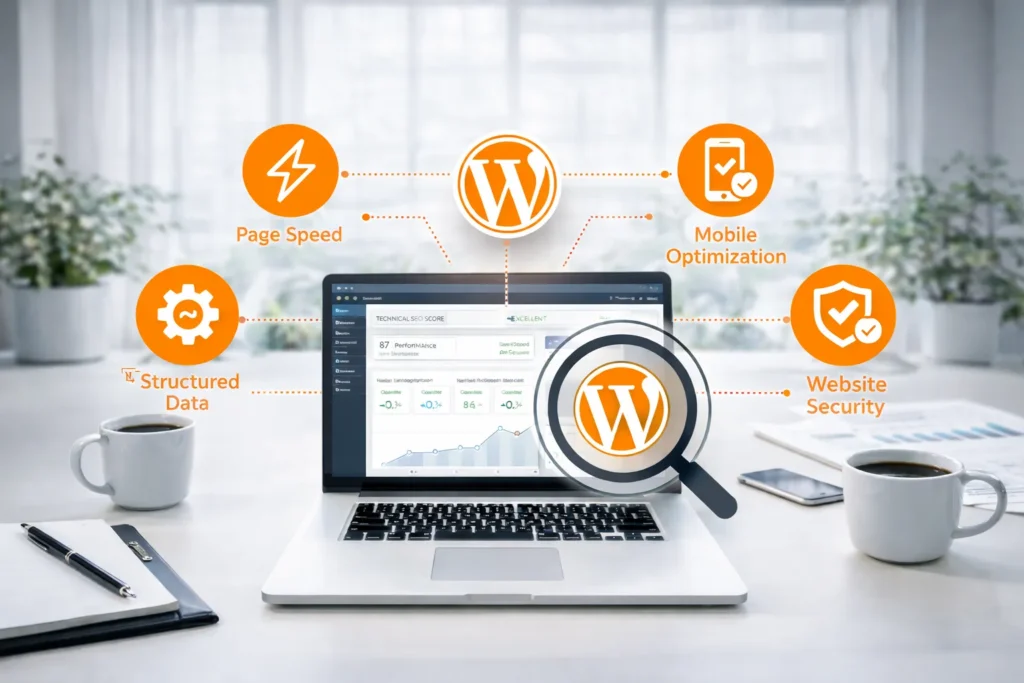
What are the Ways to uphold the SEO Effectiveness of WordPress?
Maintaining long-term SEO effectiveness for a WordPress site requires a disciplined, layered approach: prioritize technical SEO by optimizing site speed, enforcing clean permalinks, implementing canonical tags and a comprehensive XML sitemap, and ensuring strong security practices to prevent downtime and indexing issues. Use a reputable SEO plugin to manage meta elements, and regularly audit robots.txt and indexability settings to avoid accidental deindexing.
Equally critical is content and UX: produce authoritative, topical content calibrated to user intent, enforce consistent schema markup and structured data, and maintain robust internal linking to distribute authority. Continuously monitor Core Web Vitals, mobile-friendliness, backlink quality, and search analytics; iterate based on data and algorithm shifts, limit unneeded plugins to reduce bloat, and schedule periodic technical and content audits to sustain ranking resilience.
How to Use SEO Plugins for WordPress?
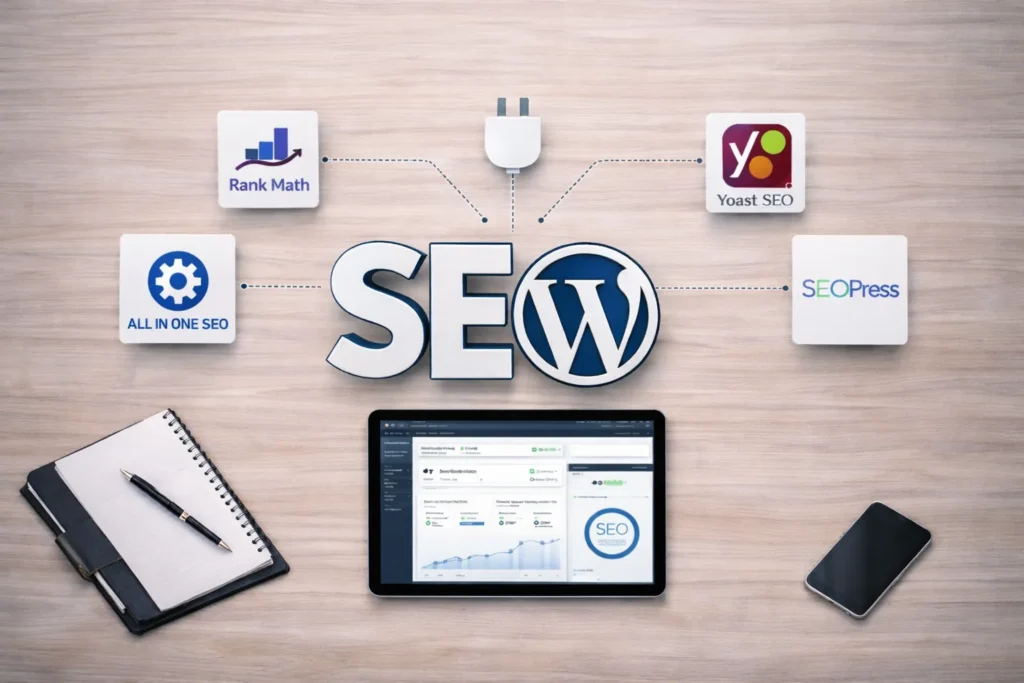
Start by installing a reputable SEO plugin for WordPress (e.g., Yoast, Rank Math) and complete the guided setup to configure site-wide defaults like meta tags, indexation rules, and social previews. Learn the plugin’s content analysis features and set a primary focus keyword for each post to receive actionable suggestions on title tags, meta description length, and keyword density.
Use the XML sitemap and robots.txt controls to ensure search engines can discover important URLs while blocking low-value pages; submit the sitemap to Google Search Console. Implement canonical URLs to prevent duplicate content issues and enable automatic redirects when URLs change.
Finally, integrate structured data (schema markup) through the plugin to enhance rich results, audit performance impacts, and regularly review plugin recommendations against analytics to refine on-page optimization and technical SEO over time.
How to Improve Internal Linking?
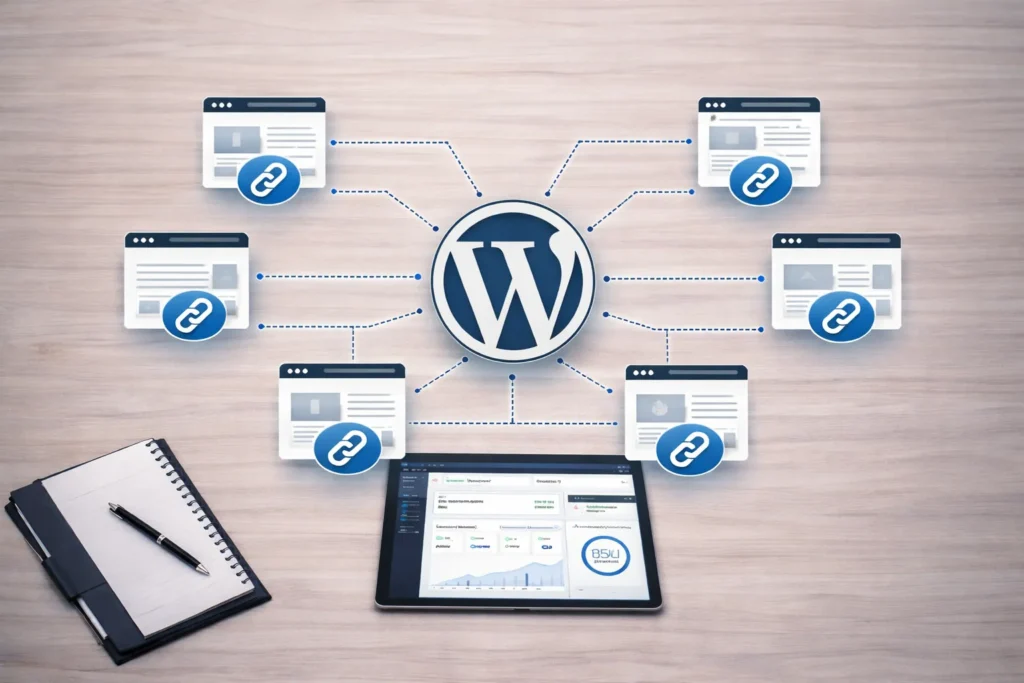
To effectively improve internal linking, begin by auditing your site to identify orphan pages and high-value hubs; use automated crawlers to map current site architecture and flag opportunities for strategic connections. Prioritize creating descriptive anchor text that reflects target keywords while remaining natural to users, and place links contextually within body content where they add real value and relevance.
Implement a logical linking hierarchy or siloing approach so topical clusters consolidate link equity and guide both users and crawlers toward conversion pages. Maintain reasonable link depth—key pages should be reachable within a few clicks from the homepage—to optimize crawlability and indexing. Regularly monitor performance metrics such as internal click-through rates and organic visibility to refine internal link distributions, and establish governance rules for when and how new content receives internal links to sustain long-term SEO gains.
Why Having an SEO Content Strategy in 2025 Is a Must
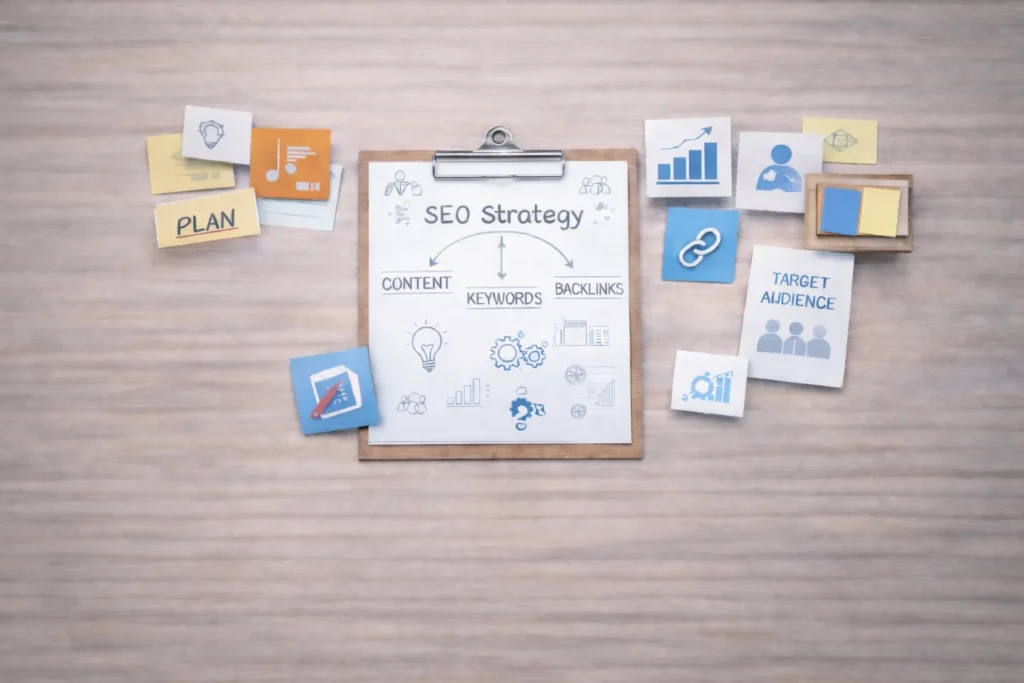
In 2025, a robust SEO content strategy is no longer optional but foundational for sustainable digital visibility. Search engines increasingly prioritize relevance, search intent, and content quality signals such as E‑E‑A‑T (experience, expertise, authoritativeness, trustworthiness), so planning content around measurable user needs ensures pages rank for high-value queries and convert organic traffic into outcomes.
Moreover, the integration of generative AI and conversational interfaces has changed how users discover information; a strategic approach aligns content formats, topical depth, and voice with these new consumption patterns while guarding against thin or duplicate AI-generated pages. Technical considerations—structured data, site performance, and crawlability—must be baked into the editorial roadmap to maximize indexation and rich-result eligibility.
In short, an intentional SEO content strategy in 2025 reduces risk, amplifies ROI on content investment, and creates a defensible competitive advantage by systematically matching authoritative, user-centered content to evolving search ecosystems.
Ways to Improve SEO on Your WordPress Website
On a WordPress site, improving SEO begins with technical fundamentals: implement a lightweight theme, enable caching, and optimize images for faster load times to enhance site speed—a critical ranking signal. Ensure mobile optimization and use an SSL certificate to secure pages and improve trust signals to search engines.
Next, leverage platform-specific tools: configure an SEO-focused plugin to manage meta tags, generate an XML sitemap, and create clean permalinks. Apply structured data via schema markup to improve SERP visibility and rich results.
Finally, craft authoritative content around targeted keywords, use descriptive alt text for images, and build quality backlinks. Regularly audit the site for broken links and duplicate content, and monitor performance with analytics and Search Console to iteratively refine your SEO strategy.
How to Boost Your WordPress Site’s SEO?
To boost your WordPress presence, implement a comprehensive SEO strategy that leverages platform-specific SEO features and addresses core SEO factors such as technical performance, site architecture, and mobile responsiveness. Begin with a robust keyword research tool to identify intent-driven terms and use a content analysis tool to optimize headings, metadata, and internal linking; these steps directly improve site relevance and user experience. Choose top WordPress plugins that enforce best practices and speed, and monitor logs to resolve crawl issues promptly.
Collaborate with SEO professionals when scaling efforts to interpret data and refine strategy, since their expertise accelerates gains in seo rankings while maintaining sustainable, long-term visibility.
Why Does WordPress Need SEO Plugins?
Because WordPress provides a flexible content platform but not an out-of-the-box optimization engine, professional sites rely on SEO plugins to implement technical best practices efficiently. These tools automate critical tasks—generating XML sitemaps, managing canonical tags, and producing structured schema markup—reducing manual errors and ensuring search engines correctly index content.
They also centralize on-page optimization: editable meta titles and descriptions, content analysis for keyword use, and social preview controls that improve click-through rates. Performance-aware plugins can defer scripts and optimize metadata to protect page speed, while integration with analytics and search consoles provides actionable insights for iterative improvement. In short, SEO plugins convert raw WordPress capability into a measurable, scalable strategy for visibility, accessibility, and sustainable organic growth.
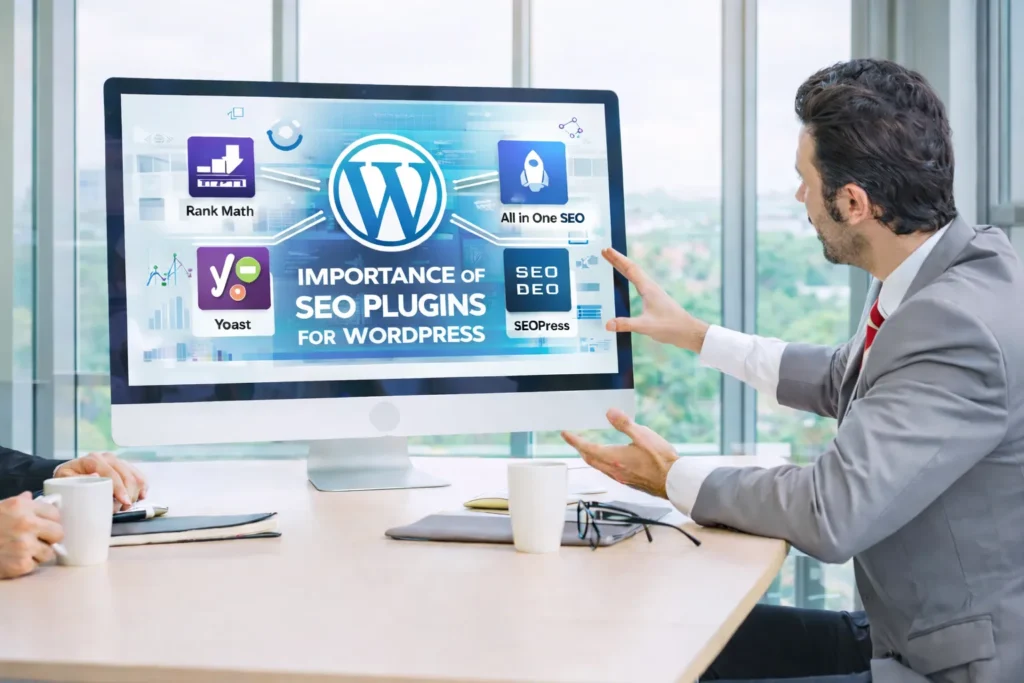
How to Build an SEO-friendly Website to Drive Constant Traffic to your Website?
Section 1: Begin with rigorous keyword research and audience mapping to define content pillars and URLs; align metadata, title tags, and headings with target intent while avoiding keyword stuffing.
Section 2: Implement robust technical SEO—ensure fast page speed, mobile-first responsive design, clean crawlability via an optimized robots.txt and XML sitemap, and canonicalization to prevent duplicate content.
Section 3: Produce authoritative, well-structured content using semantic HTML, internal linking to boost topical clusters, and schema markup for rich results; prioritize user experience and E-A-T (expertise, authoritativeness, trustworthiness).
Section 4: Establish a promotion and measurement plan: build high-quality backlinks, leverage social amplification, and monitor performance with analytics and Search Console to iterate on content and technical fixes for sustained organic traffic growth.

How to Take Your SEO Efforts to the Next Level?
To elevate your SEO efforts, begin with a rigorous foundation: conduct comprehensive keyword research that maps intent across the funnel, audit on-page elements for title tags, meta descriptions, and heading structure, and resolve basic technical SEO issues like crawl errors, canonicalization and XML sitemaps to ensure search engines index your highest-value pages.
Next, optimize for relevance and authority by developing a disciplined content strategy that prioritizes topical clusters, original research, and long-form assets that attract natural backlinks; pair this with a proactive link-building program focused on editorial placements and high-quality partnerships rather than volume.
Finally, measure and iterate: track organic KPIs with robust analytics, set experiments for UX improvements that affect dwell time and conversions, and optimize for site speed and mobile performance. Implement structured data like schema markup to enhance SERP presence and use A/B testing to validate hypotheses—continuous measurement and prioritized technical and content fixes will move SEO from tactical to strategic.
13 Ways to Improve SEO on Your WordPress Website
As an expert, I recommend a pragmatic checklist to elevate SEO on your WordPress site:
- Perform thorough keyword research
- Optimize meta titles and descriptions
- Implement clean, SEO-friendly permalinks
- Use an authoritative SEO plugin
- Generate an XML sitemap
- Enable structured schema markup to improve indexing and rich results visibility
- Prioritize technical optimizations by improving page load speed
- Enable caching
- Optimize images with descriptive alt text
- Install an SSL certificate for HTTPS
- Ensure a responsive design for optimal mobile performance
- Fix crawl errors via Google Search Console
Finally, focus on continuous content strategy and authority building: publish high-quality, intent-focused content, use internal linking to distribute page value, and pursue relevant backlinks. Monitor performance with analytics, iterate based on data, and apply targeted A/B tests to maximize organic visibility and conversions.
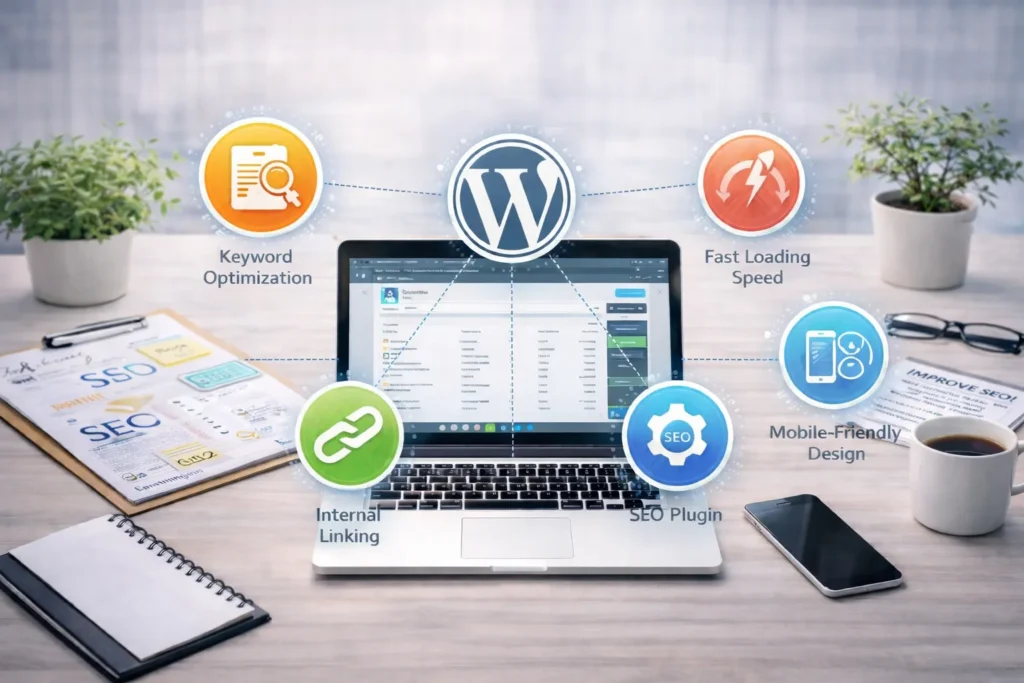
13 Best SEO Plugins for WordPress
13 Best SEO Plugins for WordPress empower site owners and developers to optimize content, metadata, and technical signals without deep engineering overhead. Leading choices such as
- Yoast SEO — provides robust on-page analysis, schema generation, XML sitemaps, and social previews
- All-in-One SEO — provides robust on-page analysis, schema generation, XML sitemaps, and social previews
- Rank Math — provides robust on-page analysis, schema generation, XML sitemaps, and social previews
- WP Rocket and Perfmatters — performance-minded tools that complement SEO by improving core web vitals
- Schema Pro and WPSSO — produce rich snippets and structured data that increase CTR
- Pretty Links and Redirection — handle link management, redirects, cloaking, and provide analytics
- Wordfence and UpdraftPlus — address security and crawling considerations and provide backups
- Broken Link Checker — an accessibility-friendly plugin that maintains user experience and search engine trust
Choosing among the 13 Best SEO Plugins for WordPress requires evaluating site size, hosting, technical expertise, and feature overlap; often, a focused combination of an SEO suite, a caching solution, and a schema/link tool yields the most measurable gains.
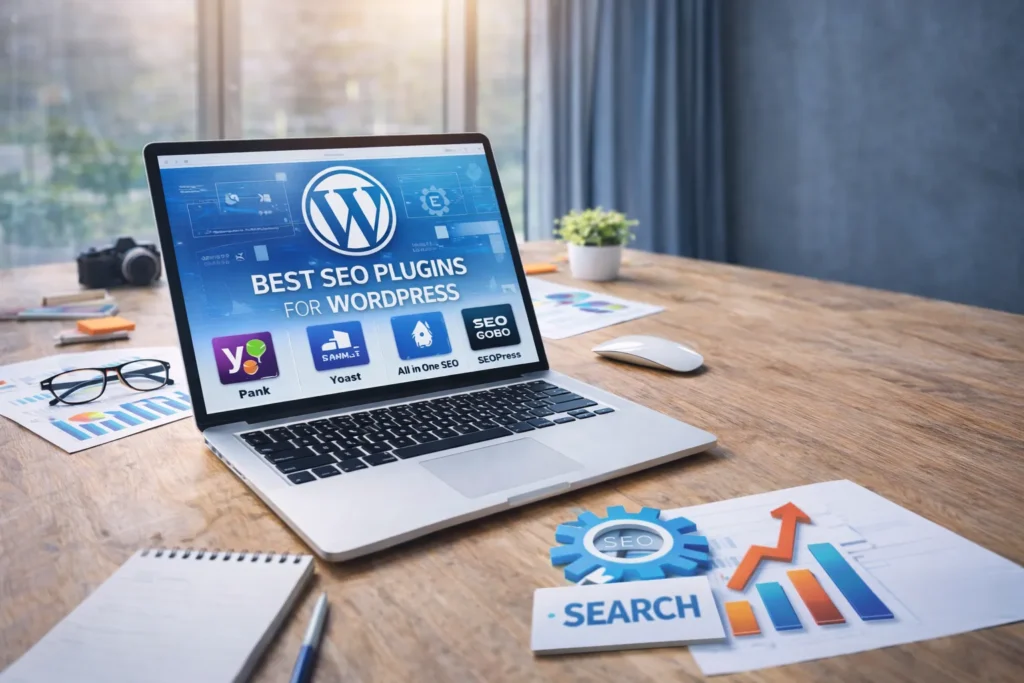
The best WordPress SEO plugins and tools
For professionals optimizing WordPress sites, a pragmatic stack combines on‑page intelligence and external analytics: Yoast SEO remains indispensable for content structure and XML sitemaps, while Rank Math offers modular features and schema flexibility for advanced implementations.
Complementary plugins like All in One SEO and SEOPress deliver performance‑oriented alternatives with white‑labeling and custom metadata controls that scale across multisite deployments. Technical optimization should leverage server‑level insights together with plugin capabilities to reduce render‑blocking resources and improve Core Web Vitals.
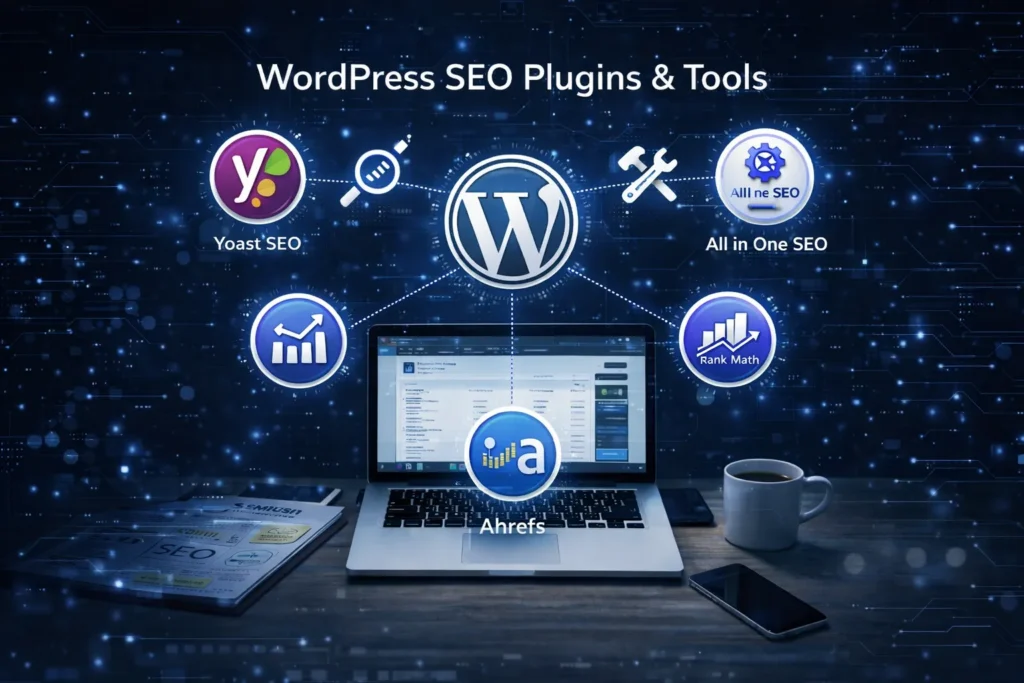
Integrate these tools with external platforms—Google Search Console and Google Analytics for measurement, and paid suites such as Ahrefs or SEMrush for backlink and keyword research—to form a closed‑loop workflow: audit, implement, monitor, iterate. This combination provides an expert, maintainable approach to WordPress SEO that balances usability, performance, and data‑driven decision making.
Will GEO Replace WordPress SEO?
In an expert assessment, GEO is unlikely to completely supplant WordPress SEO because core principles — technical performance, content relevance, and backlink authority — remain platform-agnostic and continue to be enforced by search engines.
However, GEO introduces advanced, location-aware signals and machine-learning enhancements that can materially augment ranking precision for geographically sensitive queries, so it will become a critical complementary layer rather than a wholesale replacement.
Practically, the optimal strategy is integration: evolving WordPress SEO implementations to consume GEO signals, preserve established on-site best practices, and leverage both systems to maximize discoverability and user intent alignment.

Beyond the Plugin: Understanding the Limits of SEO Optimization Tools
In practice, relying solely on a plugin for search visibility risks oversimplifying the complex dynamics of SEO; these tools are powerful for automation and diagnostics but cannot replace strategic judgment.
First, many optimization tools surface recommendations without contextualizing business goals, audience intent, or competitive landscape, so implementation requires expert interpretation.
Second, limitations in data quality, crawlability and indexation mean that automated audits can miss architectural or content-significance issues that affect rankings, while frequent algorithm updates demand ongoing human-led adaptation. Ultimately, combine plugins with rigorous analytics, thoughtful content strategy and periodic manual audits to translate signals into sustainable organic growth rather than treating software as a turnkey solution.

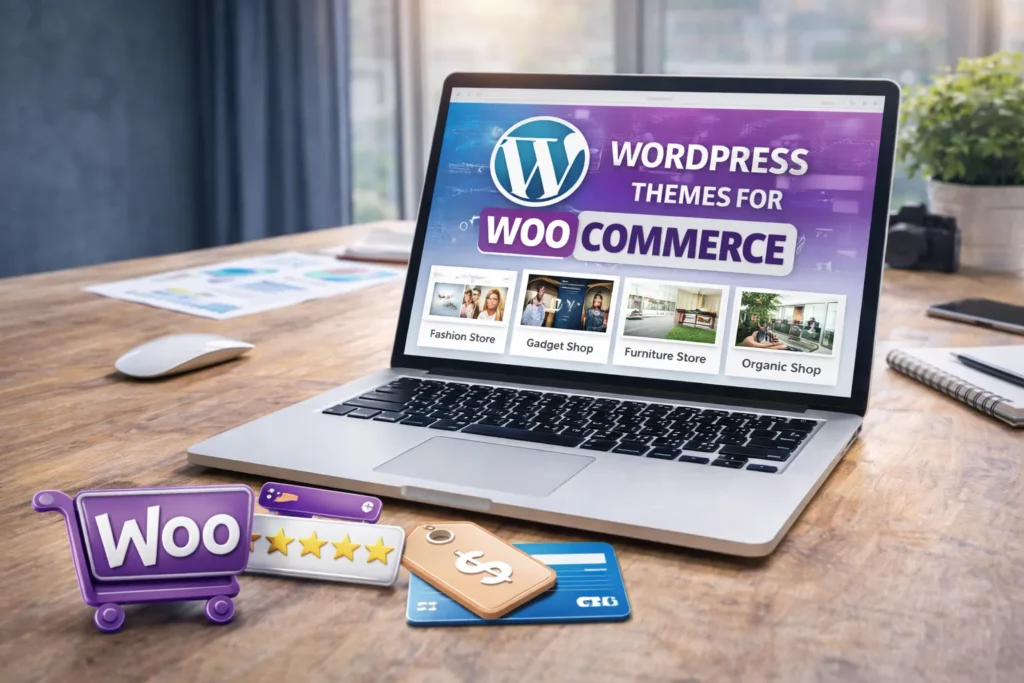
5 Top WordPress Themes for WooCommerce
As an e-commerce specialist, I recommend five reliable options that balance performance, customizability, and WooCommerce-specific features: Astra for its lightweight architecture and deep WooCommerce integration; Flatsome when you need a pixel-perfect, conversion-focused design with a built-in page builder; and OceanWP for extensive extension compatibility and flexible product-layout controls.
For teams prioritizing speed and developer-friendly markup, GeneratePress provides a modular approach with schema-ready output and minimal overhead; whereas Storefront, maintained by the WooCommerce team, guarantees native compatibility and predictable updates.
Choose based on technical requirements: favor GeneratePress or Astra for performance-driven shops, Flatsome for high-conversion UX needs, and OceanWP or Storefront when ecosystem extensibility and official support matter most.
Conclusion
Optimizing a WordPress site for SEO requires more than publishing content. The right SEO plugins help manage technical SEO, content optimization, performance, structured data, and internal linking efficiently. Each plugin in this guide serves a specific purpose, and together they create a strong SEO foundation.
Rather than installing every plugin available, focus on choosing the tools that align with your site’s goals. When used correctly, these 13 WordPress SEO plugins can dramatically improve search visibility, user experience, and long-term organic growth.
Read more about: Guide to local SEO: Local SEO for Small Business Strategies
Have you ever wondered why some websites effortlessly climb to the top of search results while others struggle to gain visibility even after months of effort? In 2025, on-page SEO optimization has become more strategic, more data-driven, and far more influenced by AI than ever before. Search engines interpret content with remarkable precision now, analyzing intent, context, structure, user satisfaction, and credibility signals all at the same time. That means your website cannot rely on outdated tactics or basic keyword placement to compete.
On-page SEO today is about crafting a page that search engines trust and users genuinely enjoy reading. This involves understanding how search systems evaluate content quality, how artificial intelligence interprets page meaning, and how user behavior shapes rankings. The techniques you apply directly to your page elements—headlines, internal links, schema, content depth, and more—can significantly influence where your site lands in the search results.
This guide breaks down the most important on-page SEO strategies you should focus on in 2025. Each idea is explained in detail, providing practical insights you can implement to enhance your website’s performance. Let’s begin.
What Is On-Page SEO?
SEO refers to practices that improve how a web page appears and performs; on-page SEO involves optimizing the code of a page, page urls, alt text, and structured data so every page and page on your website can rank higher in 2025. An on-page SEO checklist covers elements of on-page SEO like using relevant keywords, the right keywords, meta tags, and content, because on-page SEO is important as a primary SEO factor and ranking factor.
On-page SEO involves optimizing page speed, page load for mobile device users, optimizing images, and using Google Images best practices, check with Pagespeed Insights, following optimization tips for page optimization, and considering featured snippet opportunities — combining technical SEO and on-site SEO to improve user experience and address common on-page SEO issues.
Mastering on-page SEO in 2025 requires recognizing that SEO stands for search engine optimization and that on-page SEO focuses on refining a page’s code, URLs, and all individual page elements to improve rankings. Key on-page and on-site SEO components include using relevant and appropriately targeted keywords, providing descriptive alt text for images, implementing structured data, and having a clear strategy for earning featured snippets.
Part of on-page SEO is technical SEO, like page speed, page load, and page optimization on your website optimization tips such as optimizing images, running Pagespeed Insights, following an on-page seo checklist, and improving user experience. These elements of on-page seo and common on-page SEO practices make page optimization an essential SEO factor, so every page on a mobile device benefits from speed optimization and better chances to be found.

On-Page SEO: How to Do It?
On-Page SEO begins with understanding and prioritizing the on-page factors that search engines evaluate: title tags, meta descriptions, header structure, URL clarity, image alt text, and optimized content that matches user intent. Craft concise titles and compelling metas, use headers to organize topics, and sprinkle relevant keywords naturally while avoiding stuffing.
Another key step is treating each page as a standalone asset and optimizing the singular on-page SEO factor of user experience — fast load times, mobile responsiveness, and clear calls to action. Finally, use internal linking, structured data, and regular audits to measure performance and iterate for continuous improvement.

Why Is On-Page SEO Important?
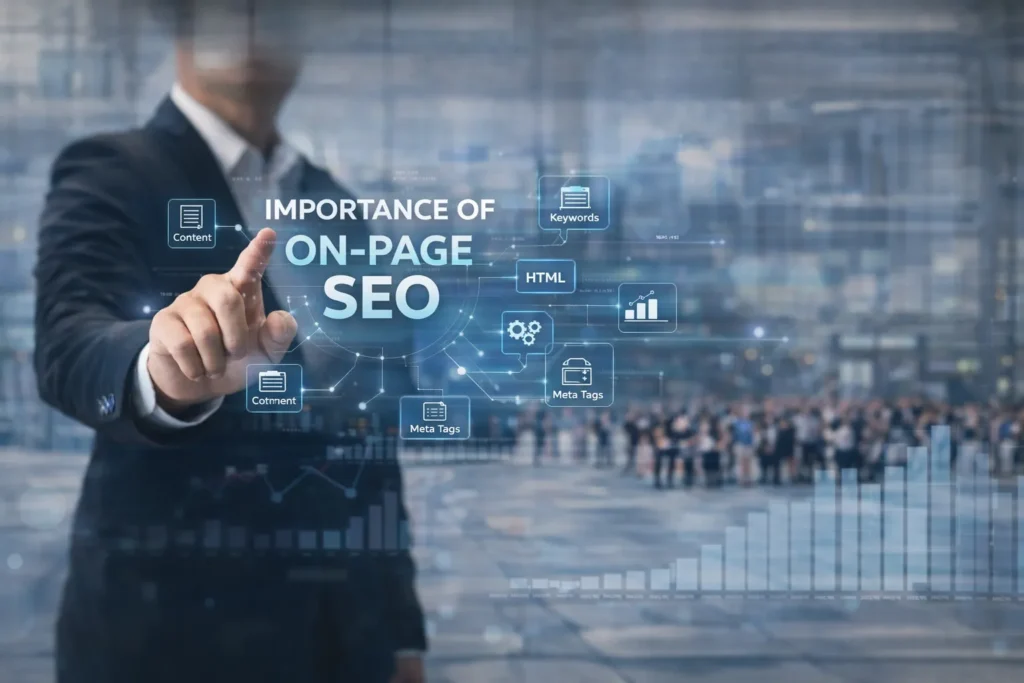
On-Page SEO is vital because it directly influences how search engines interpret and rank a page by optimizing elements like titles, meta descriptions, and header tags. It improves content relevance and ensures keywords are used naturally, which boosts visibility for targeted queries. It also enhances user experience through clearer structure, faster load times, and mobile friendliness, reducing bounce rates and increasing engagement. Proper on-page practices make a site easier to crawl and index, supporting long-term organic growth and more effective use of link-building efforts. Ultimately, strong on-page SEO delivers better discoverability, higher quality traffic, and improved conversion potential. It provides measurable results through analytics and performance tracking.
What Are The 4 Types of SEO?
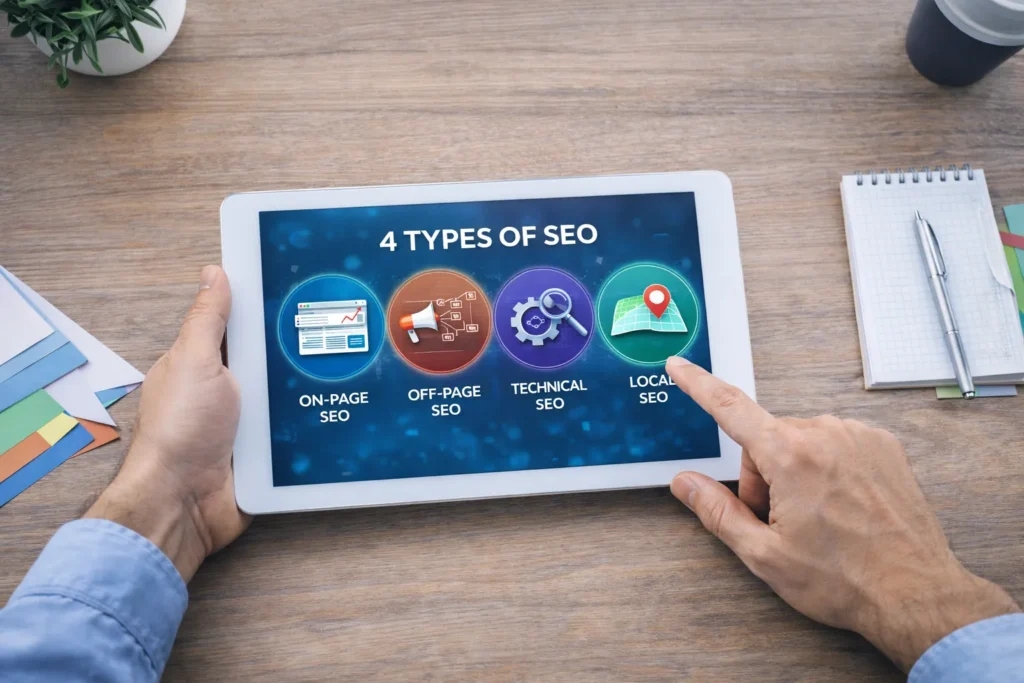
Search engine optimization involves several strategies; one primary approach is On-page SEO, which focuses on optimizing content, headings, meta tags, and keyword use on individual pages to improve relevance and user experience. Another key area is Off-page SEO, centered on building authority through backlinks, social signals, and online reputation that signal trust to search engines.
Technical aspects are handled by Technical SEO, which ensures site architecture, crawlability, site speed, structured data, and mobile-friendliness meet search engine requirements. Finally, Local SEO targets location-based searches by optimizing Google Business Profile, citations, localized content, and reviews so businesses appear in local packs and maps for nearby customers.
What Are The Fundamentals of On-Page SEO?
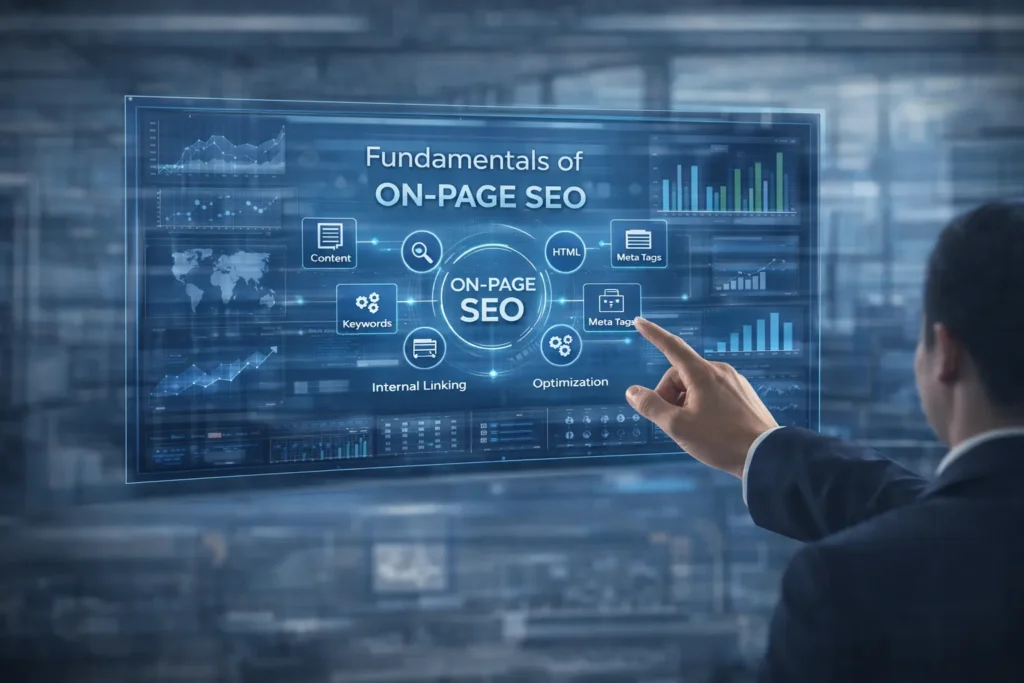
The fundamentals of On-Page SEO begin with optimizing core elements: crafting unique title tags and compelling meta descriptions, using clear, keyword-focused headings (H1–H6), and producing high-quality, relevant content that naturally integrates target keywords. Clean, descriptive URL structure and logical site architecture help both users and search engines understand page purpose, while thoughtful internal linking distributes authority and improves crawlability.
Technical and user-focused factors also matter: optimize images with descriptive alt text, ensure fast page speed, prioritize mobile-friendliness, and implement structured data like schema markup to enhance SERP appearance. Consistent monitoring and iteration based on analytics and user behavior complete the on-page SEO fundamentals.
An expert approach to the fundamentals of On-Page SEO begins with optimizing the title tag, meta description, and heading structure (H1–H6) to reflect targeted keywords and user intent while remaining compelling for clicks.
High-quality, original content that satisfies searcher queries, uses semantic variations, and maintains proper keyword placement is essential, as is thoughtful URL structure and descriptive alt text for images to improve accessibility and relevance.
Technical considerations—fast page speed, mobile-friendliness, secure HTTPS, clean internal linking, and implementation of structured data—ensure crawlers can index and understand pages, maximizing visibility and click-through rates.
What Is The Difference Between On-page SEO and Off-page SEO?
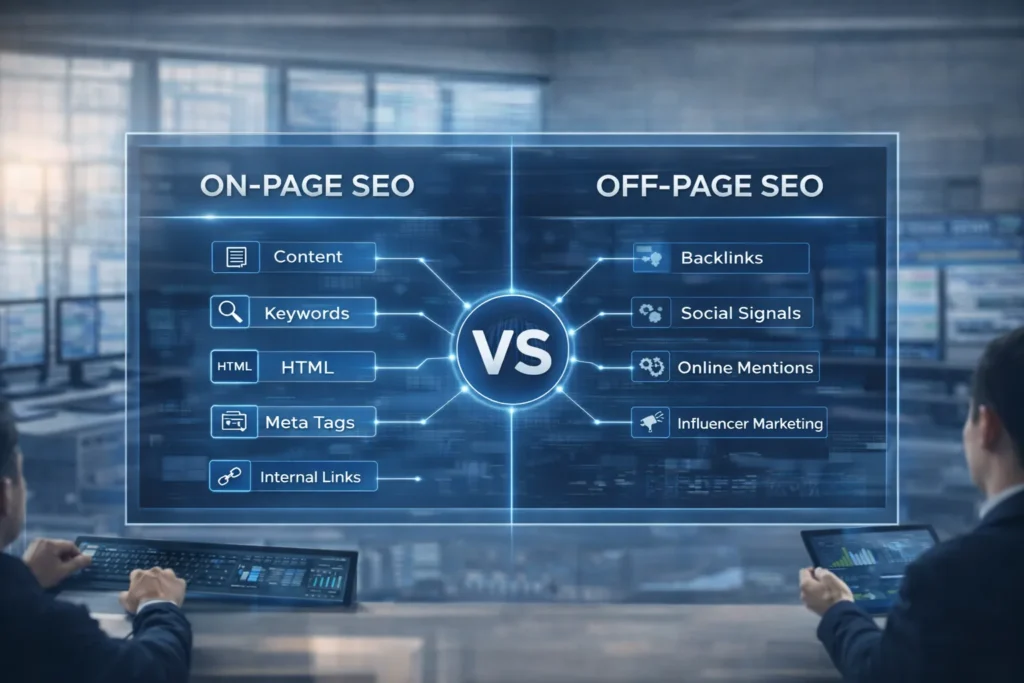
The distinction between on-page SEO and off-page SEO is foundational: on-page SEO concerns all optimizations implemented directly within a website—content quality, semantic markup, URL structure, internal linking, page speed, and meta signals—to improve relevance and crawlability for target queries.
By contrast, off-page SEO refers to external signals that establish authority and trust, primarily through backlinks, social endorsements, brand mentions, and referral traffic; these factors influence how search engines perceive a site’s reputation relative to competitors.
An effective strategy aligns both disciplines: robust on-page SEO ensures pages are discoverable and useful, while proactive off-page SEO amplifies visibility and ranking potential by validating that usefulness across the broader web.
How to Implement Proven On-Page SEO Techniques?
Implementing proven on-page SEO techniques begins with rigorous keyword research to align user intent and map primary keywords to specific pages; optimize title tags, meta descriptions, and header tags to reflect that mapping while keeping character limits and readability in mind. Ensure URLs are short and descriptive and use canonical tags to avoid duplication.
Deliver high-quality, original content that satisfies intent, structures information with semantic HTML, and uses schema markup where relevant to enhance rich results; optimize images with descriptive alt text and modern formats. Finally, improve page speed, implement strategic internal linking, and measure outcomes through analytics and ranking tools to iterate on performance.
Use a page SEO checker, follow a guide to on-page SEO, and apply on-page SEO basics, on-page SEO practices, and advanced optimization techniques; combine on-page and off-page efforts, monitor external links, the type of content on your landing page, and remember SEO is not a one-and-done task—mastering on-page SEO requires ongoing content optimization and an experienced seo specialist to apply effective SEO tactics.
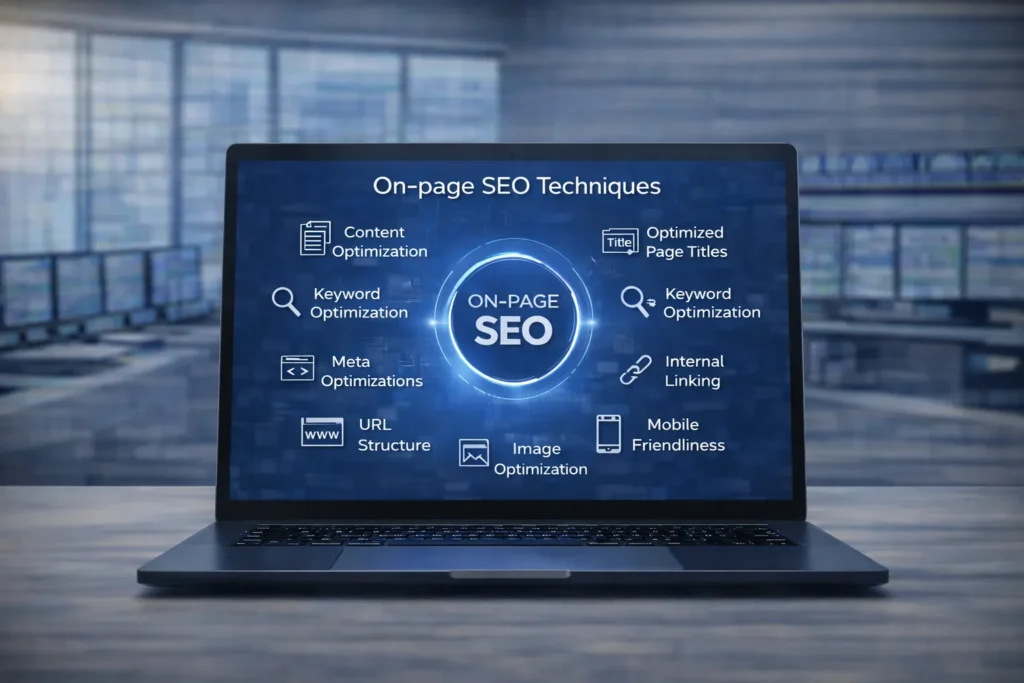
How to Optimize for Zero-Click Search?
To capture zero-click search traffic in 2025, prioritize schema, featured-snippet-friendly formatting, and concise answers that optimize your content for intent; an expert approach integrates relevant keywords naturally while maintaining authority. Treat page optimization as iterative: test headings, add quick facts, and monitor SERP features to improve visibility without requiring a click.
Technically, reinforce efforts with robust on-site seo and address common on-page seo issues—meta markup, load speed, and accessibility—because on-page SEO is important. Use Google images with descriptive alt text and structured data for visual answers, and apply practical optimization tips on each page on your website to maximize zero-click impact.

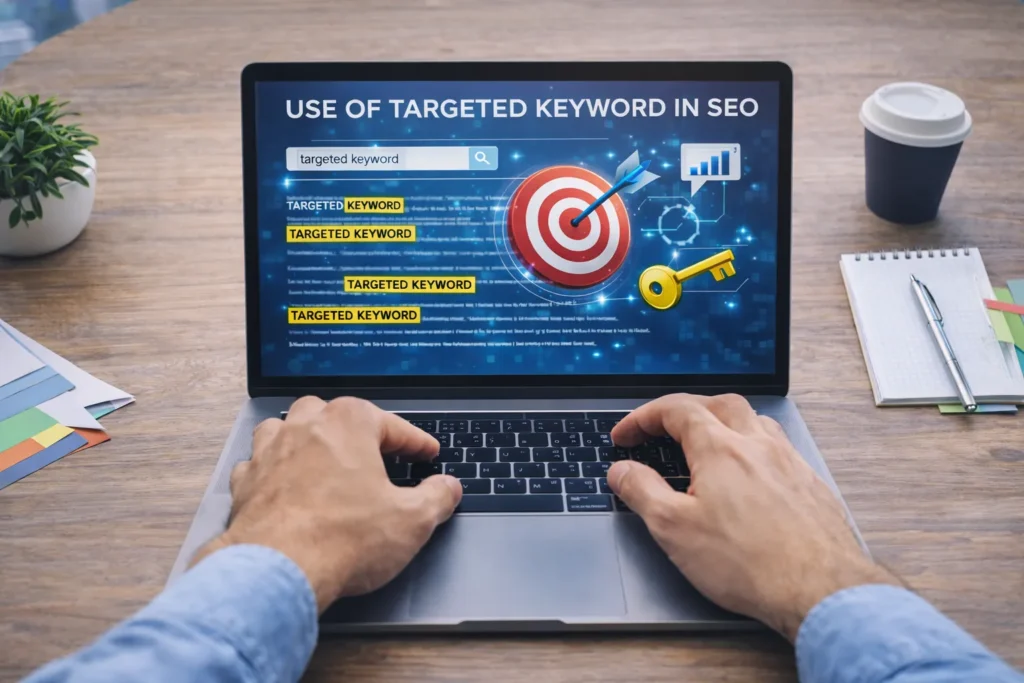
How to Use Your Target Keyword in the First 100 Words?
Begin by positioning the target keyword naturally within the opening sentence to signal relevance to both users and search engines; avoid forced insertion that harms readability. Immediately follow with a concise context sentence that reiterates the target keyword in a slightly different form — for example, a close synonym or modifier — to reinforce semantic relevance without keyword stuffing. Use the first 100 words to establish topical intent, include one supporting fact or value proposition, and ensure the keyword appears in a visible element like the lead sentence or subheading for editorial clarity.
Conclude this opening block by maintaining user-focused copy: prioritize clarity and usefulness while keeping the first 100 words grammatically coherent and engaging for click-through and retention.
How to Write an Engaging Meta Description?
Start by succinctly articulating the page’s value proposition and primary benefit to the reader; a focused meta description should answer “what’s in it for me?” within a single, compelling sentence. Keep language active and use a clear call-to-action to increase click-throughs while remaining honest about content. Include one or two strategic keywords naturally to signal relevance without keyword stuffing. Finally, respect the optimal character limit, preview snippets on mobile and desktop, and iterate using performance data to refine messaging over time.

Why Should You Optimize Your URLs for SEO?
Optimizing URLs is a foundational technical task that improves site crawlability and indexation by making structure predictable for search engines, which in turn enhances ranking potential. Clear, keyword-relevant URLs provide explicit signals about content relevance and topical focus, complementing on-page elements like titles and meta descriptions. Additionally, readable URLs boost user experience and trust, increasing click-through rates from search results and social shares, while simplifying site maintenance, canonicalization, and analytics — all of which contribute to more efficient and effective SEO performance.

How to Write a Compelling Title Tag?
Write a compelling title tag by prioritizing clarity, relevance, and intent: lead with primary keywords that reflect user queries, keep length within 50–60 characters to avoid truncation, and ensure the phrase accurately summarizes page content.
Balance optimization with persuasion—use action-oriented words or a subtle value proposition to improve click-through rate, and include concise branding only when it adds authority or recognition without diluting the main message.
Continuously test variations, align tags with on-page content and user intent, and avoid keyword stuffing so search engines and users receive a coherent, trustworthy signal about page purpose rather than a list of terms.

How to Optimize Your Content for Key SEO Factors?
To effectively Optimize Your Content, adopt a disciplined approach that aligns on-page elements with measurable outcomes: prioritize keywords informed by research, craft compelling meta tags, and structure copy with clear headings and schema to improve crawlability and relevance for user intent.
Simultaneously, address technical and authority signals—ensure fast page speed, robust mobile-friendliness, reliable internal linking, and a proactive outreach strategy for high-quality backlinks—while continually testing performance with analytics and iterating content to maintain visibility across evolving search algorithms.

How to Structure Your Content for LLM Summarization and Passage Ranking?
Organize content deliberately to optimize LLM Summarization and Passage Ranking: use clear headings and consistent section boundaries so models can identify topical anchors, and prefer atomic passages of predictable token length for reliable ranking. Include structured metadata (dates, authors, canonical URLs) and normalize formatting to reduce noisy variations that confuse embedding similarity. Craft a strong lead or anchor sentence at the start of each passage to surface intent during summarization, and maintain focused paragraphs to preserve semantic granularity. Finally, canonicalize terminology and provide explicit query–document signals (FAQ-style Q/A or labeled examples) to improve both concise summaries and precise passage retrieval.

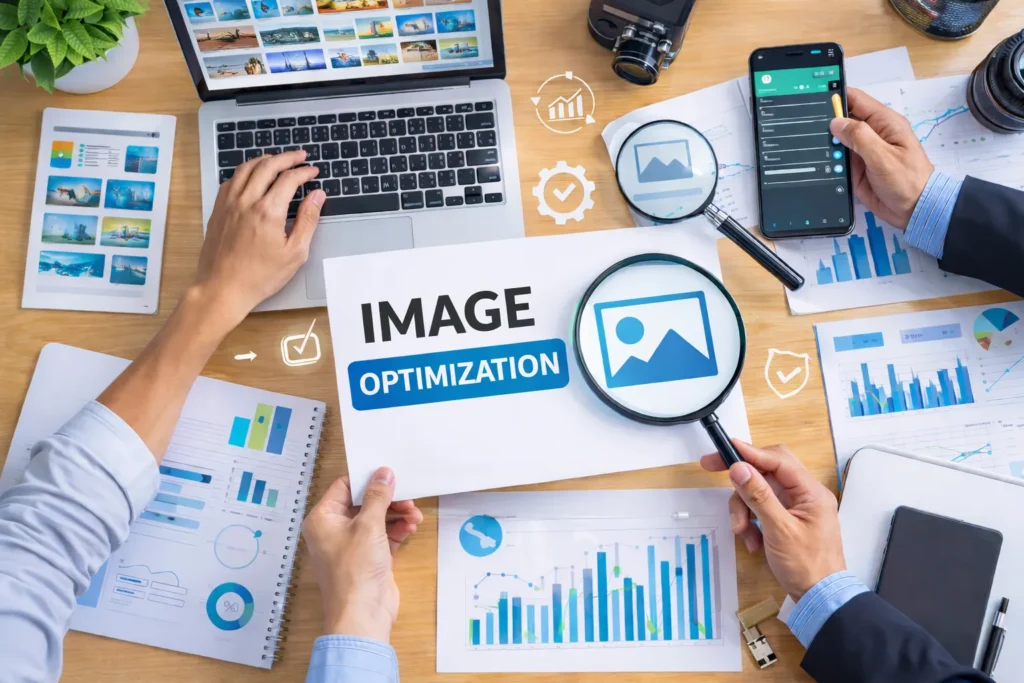
How to Optimize Your Images?
Optimizing images is a foundational practice for modern websites: compress files intelligently, serve responsive sizes, and use modern formats to reduce load times while preserving visual fidelity — all critical to page optimization and faster user experiences. Prioritize descriptive filenames, structured alt text, and proper caching policies to help crawlers index visual content and to optimize your content for accessibility and relevance. In the context of on-site SEO, image sitemaps and lazy loading complement semantic markup to improve perceived and actual performance. Looking ahead to 2025, adopt AVIF/WebP where supported and automate image pipelines to sustain speed and ranking gains.
How to Optimize Your Content for Featured Snippets?
To capture Featured Snippets, create content that directly satisfies user intent with clear, scannable answers; prioritize concise answers of one to three sentences at the top of pages and support them with detailed explanations below.
Use deliberate structure: employ descriptive headers, numbered steps, and bullet lists to mirror how search engines extract snippet-ready content, and optimize for targeted queries by analyzing question-based keywords and variations.
Enhance credibility with internal linking, authoritative citations, and appropriate schema markup, then monitor performance to iterate—balancing snippet optimization with comprehensive value to sustain long-term authority and visibility.

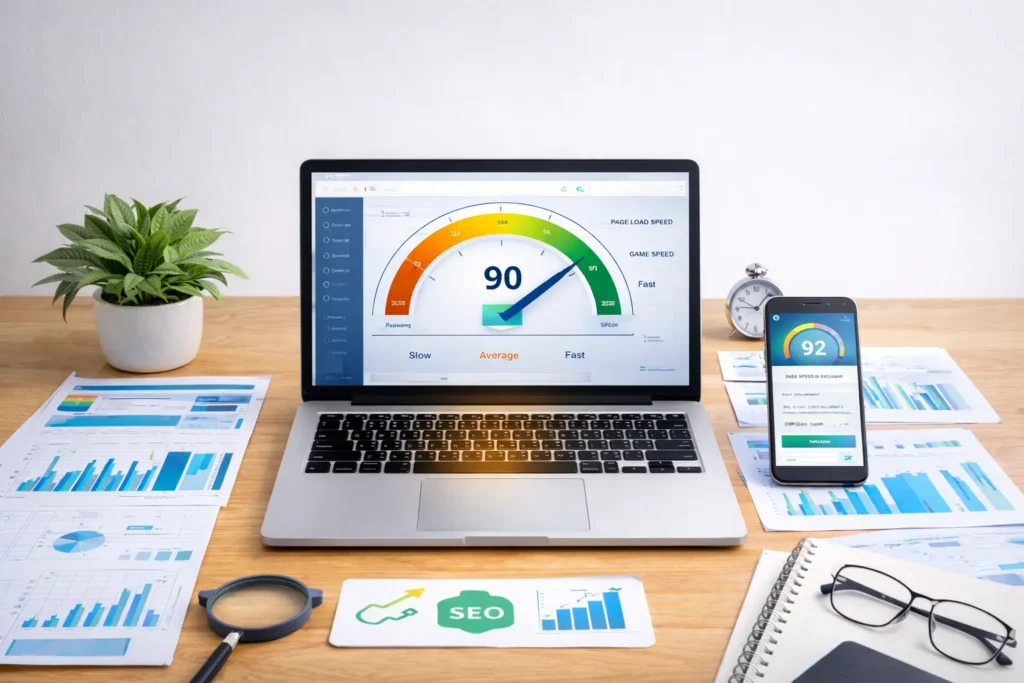
How to Improve Page Loading Speed?
Improving page loading speed is critical for user experience and conversion; begin by measuring real-user metrics such as LCP, FCP and Cumulative Layout Shift to prioritize issues and set measurable targets.
Implement proven optimizations: enable browser caching, apply compression (gzip or Brotli), use a geographically distributed CDN, and perform minification and bundling of CSS/JS; defer or adopt lazy loading for offscreen assets and optimize images with modern formats.
Embed performance into development workflows by automating audits, tracking regressions in CI, and iterating based on user-centric metrics to sustain fast, reliable pages at scale.
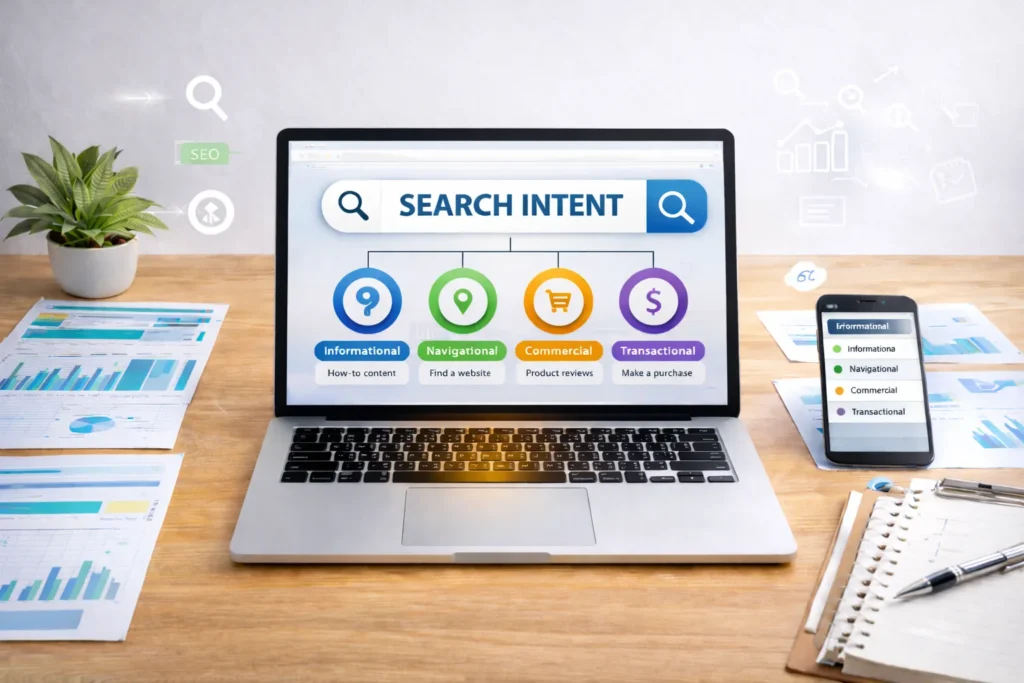
How to Satisfy Search Intent?
To effectively Satisfy Search Intent, content must prioritize alignment with the user’s primary goal—informational, navigational, transactional, or commercial—rather than just chasing keywords.
Start by diagnosing query intent through SERP analysis and user behavior signals, then map content type, depth, and format to deliver immediate value and reduce friction.
Optimize on-page elements for both humans and crawlers: titles, meta descriptions, structured data, and internal linking should reinforce content relevance and improve visibility in the SERP.
Continuously measure engagement and conversion metrics to refine topical coverage, satisfy evolving user intent, and sustain durable rankings through intelligent keyword optimization.
How to Improve User Experience?
Start by prioritizing user research and clear requirements; understanding user needs through interviews, surveys and analytics yields actionable insights that shape product direction. Focus on usability—streamline flows, minimize cognitive load, and ensure consistent design patterns to reduce friction and increase task success. Implement regular usability testing and A/B experiments to validate changes and iterate based on data rather than assumptions. Optimize performance and mobile responsiveness because speed directly affects satisfaction and retention. Finally, build continuous feedback loops with in-app feedback, support channels, and quantitative metrics so teams can prioritize improvements, maintain accessibility compliance, and deliver a reliable, delightful user experience.

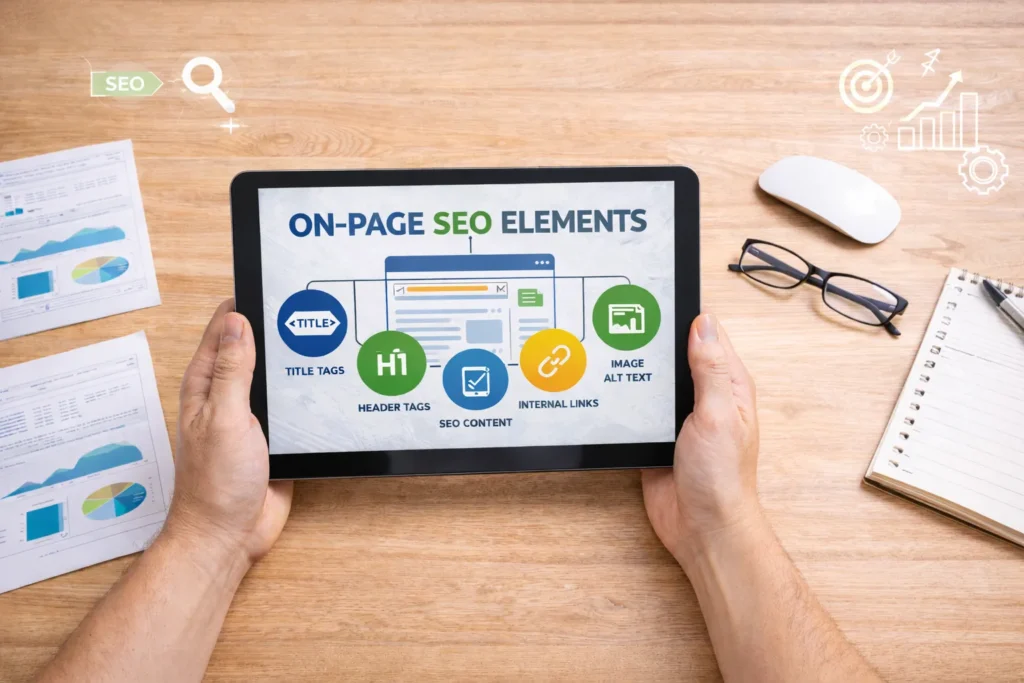
On-Page SEO Elements
Effective on-page optimization demands meticulous attention to core elements: a concise title tag, compelling meta description, and semantically structured header tags to convey topical hierarchy and signal relevance to search engines. Content must be optimized for user intent, integrating primary and secondary keywords naturally while maintaining depth and originality.
Technical facets such as clean URL structure, descriptive image alt text, appropriate internal linking, and implementation of schema markup enhance crawlability and rich-result eligibility; concurrently, improving page speed and mobile responsiveness reduces bounce rates and supports rankings.
Why Add External Links?
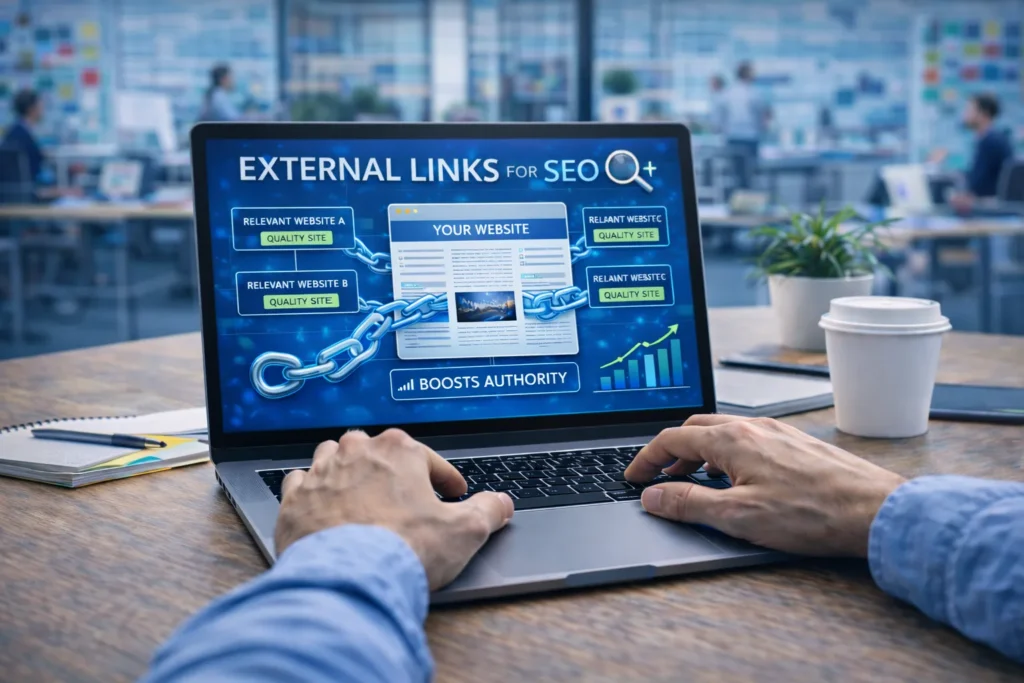
In professional content strategy, adding external links signals rigorous sourcing and enhances perceived authority by connecting claims to reputable research, official data, or expert commentary. This practice not only substantiates arguments but also reduces liability by allowing readers to verify original material.
From a user-centered perspective, curated external links improve user experience by offering efficient pathways to deeper context, complementary tools, or updated datasets, which increases trust and retention.
For discoverability, thoughtful linking supports SEO and professional networking: it demonstrates topical relevance, encourages reciprocal citations, and promotes transparency, all of which contribute to sustainable authority and audience growth.
Advanced On-Page SEO Tactics
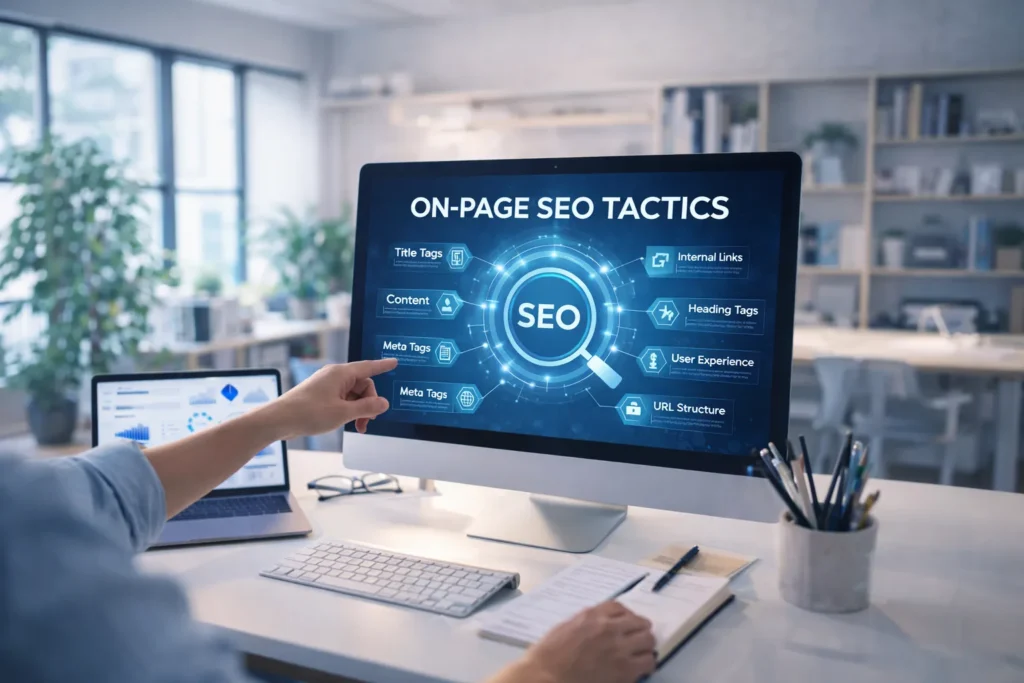
In implementing Advanced On-Page SEO Tactics, practitioners should prioritize precise structured data through schema markup and rigorous use of canonical tags to prevent duplication while signaling intent to crawlers. Equally critical is optimizing modular content with content clustering and strategic internal linking to distribute authority and clarify topical relevance.
Performance and user experience remain indispensable: refine page speed and Core Web Vitals, optimize images and critical CSS, and craft concise, action-oriented meta tags enriched with semantically relevant and LSI keywords. These measures together elevate indexability, relevance, and ranking potential in competitive SERPs.
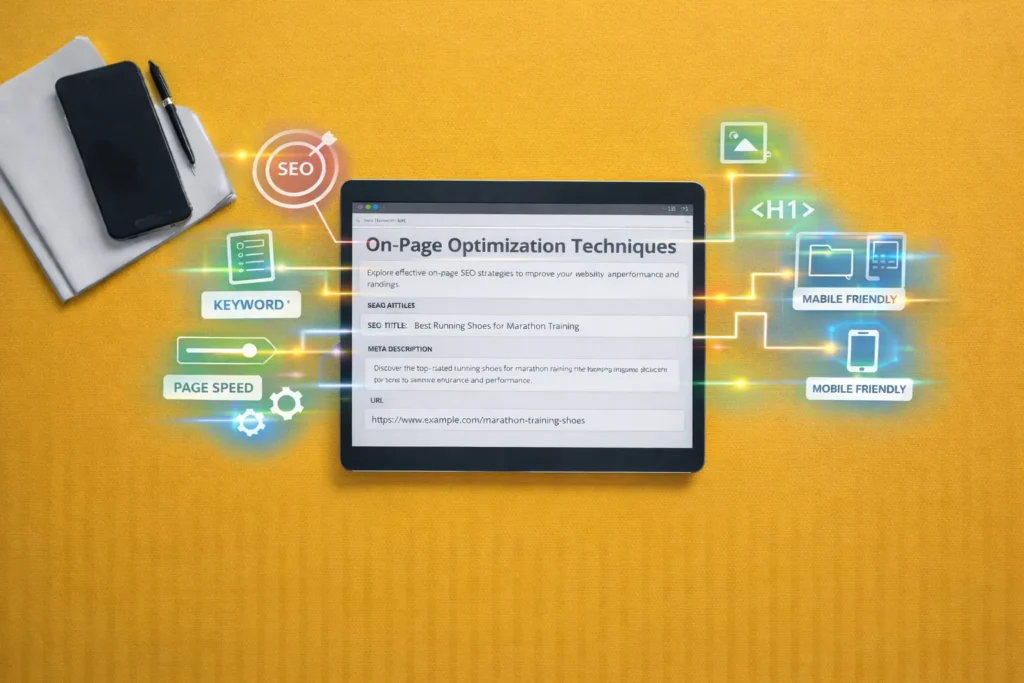
Ten on-page Optimization Techniques
On-page SEO is not about tricks or hacks. It is about clarity, structure, relevance, and user experience. When content is easy to understand for users, it becomes easier for search engines to rank. Ten on-page Optimization Techniques:
1. Optimize Title Tags for Search Intent
2. Write Clear and Intent-Driven Meta Descriptions
3. Proper Use of Header Tags (H1–H6)
4. Keyword Placement Without Over-Optimization
5. Optimize URL Structure
6. Improve Content Depth and Topical Coverage
7. Internal Linking With Contextual Relevance
8. Image Optimization (Alt Text and File Names)
9. Page Speed and Core Web Vitals Optimization
10. Mobile Optimization and Readability
Prioritize title tags and meta descriptions to improve click-through rates and relevance, while structuring content with clear header tags (H1–H3) to signal hierarchy to crawlers. Ensure clean, descriptive URL structure and disciplined keyword optimization that balances primary and semantic terms without stuffing; pair this with consistently high content quality that satisfies user intent and dwell-time metrics. Implement strategic internal linking to distribute authority, optimize image optimization (alt text and compression), enforce mobile responsiveness, and accelerate page speed to reduce bounce rates and improve rankings.
Conclusion
On-page SEO in 2025 is no longer limited to inserting keywords or editing metadata. It has evolved into a comprehensive system that blends user experience, semantic structure, AI interpretation, technical performance, and behavioral signals. Every element on the page contributes to how search engines perceive your expertise, intent alignment, and value.
When you apply the techniques discussed in this guide, your pages become clearer, more authoritative, more user-friendly, and better aligned with search expectations. Each optimization step strengthens your chances of ranking higher and maintaining visibility in competitive environments.
Your website’s success in 2025 depends on consistent refinement, deep topic coverage, and delivering genuine value. On-page SEO is a long-term strategy, but with the right structure and commitment, your pages can outperform competitors and continue to grow sustainably.
Read more about: Off-Page SEO Checklist: Boost Ranking with Off-Page SEO
Why do some small businesses appear at the top of local search results while others remain invisible even in their own neighborhood? Local SEO is often the deciding factor. When customers search for services “near me” or within a specific city, search engines rely on local relevance, trust signals, and optimization quality to decide which businesses deserve visibility.
In 2026, local SEO is no longer limited to creating a business profile and adding an address. It now involves review management, local content strategy, technical optimization, user experience, and consistent brand signals across the web. For small businesses, local SEO can be the most cost-effective way to attract ready-to-buy customers. This guide explains exactly how small businesses can use local SEO strategies to improve rankings, increase visibility, and drive more local leads.
SEO for Local Businesses
As a business owner, understanding that local SEO is the process of improving your visibility in local search results is essential; a complete guide to local SEO or a guide to local SEO (and a complete guide or guide for 2025 when planning ahead) stresses that a well-optimized Google business profile/Google business profile listing (formerly Google my business) with accurate business information and consistent business name across business directories and other business listing points is crucial for local SEO and will help your business appear in the local pack to attract local customers and targeted local traffic.
Effective search engine optimization for local involves local keyword targeting, optimizing for local intent and the local area, proactive responding to reviews (including managing a negative review), soliciting customer reviews, local link building, and tracking local SEO performance. This local SEO for small business local SEO guide outlines local SEO services, an effective local SEO strategy, and tactics to optimize local SEO, boost local search rankings, improve local SEO rankings, and ultimately help your business reach a local audience—whether promoting a local event or sustaining a strong presence in the local search engine.

Why is local SEO important?
A practical expert explains that local SEO efforts and local search engine optimization are central because they connect customers to nearby products and services; the importance of local SEO lies in increased visibility in local search results and measurable SEO results. When your business details are consistent across local business directories, and you target relevant local keywords, local SEO optimization improves rankings and helps with appearing in the local pack. An effective local SEO strategy combines SEO and local SEO best practices and local link building.
This complete guide to local SEO and guide to local SEO for 2025 outlines how local SEO is the process of aligning SEO optimization to SEO targets, using local SEO tools, and prioritizing local SEO ranking factors. The difference between SEO and local approaches, and why local SEO is important, is highlighted by community signals like sponsoring local events and engagement with the local community.
For sustained growth, investing in local SEO and local SEO services to optimize local SEO creates strong local SEO performance; this complete guide or guide for 2025 shows how to enhance your local presence — because when it comes to local, targeted, relevant local tactics are crucial for local SEO.

What is SEO for Small Businesses?
As an expert, I explain that local results are what matter when local SEO focuses on getting visibility in neighborhood searches; effective strategies to get local customers to find your offerings require ensuring relevant to your local listings , and that business information is accurate. When it comes to local SEO, consistency is essential: local SEO often leverages citations, reviews, and on-page signals so various local SEO tactics align with how people search for local businesses.
Practically, local SEO focuses on optimizing your website pages, business directories, and map listings so that search results are closely aligned with your specific business and service areas. In addition, encouraging customers to search for your business by name and leave genuine reviews helps build credibility and trust. As a result, this visibility and social proof can sometimes generate new leads or inquiries within a very short time frame. Moreover, a focused local SEO strategy refines the keywords, citations, and listings that play a critical role in local discovery, especially for businesses serving multiple locations. Consequently, this approach drives more targeted traffic, strengthens customer confidence as prospects engage with your brand, and ultimately positions your business as a trusted local provider with a stronger presence in your market.

How Does SEO Work for Small Businesses?
Overview: Local SEO operates by aligning a business’s online presence with geographically specific search queries, prioritizing relevance, prominence, and proximity. Search engines evaluate signals such as on-page optimization, NAP consistency (Name, Address, Phone), and the quality of local citations to determine local relevance.
Technical Signals: Structured data like schema markup, mobile performance, and clear service-area pages communicate intent and context to algorithms, while geo-targeted content and keyword optimization help match queries to local offerings.
Authority & Trust: Reviews, Google My Business (now Google Business Profile) completeness, local backlinks, and user engagement signals boost prominence and influence placement in the local pack. Continuous monitoring of analytics and reputation, combined with link-building and citation management, sustains visibility by demonstrating ongoing relevance and authority in a community.
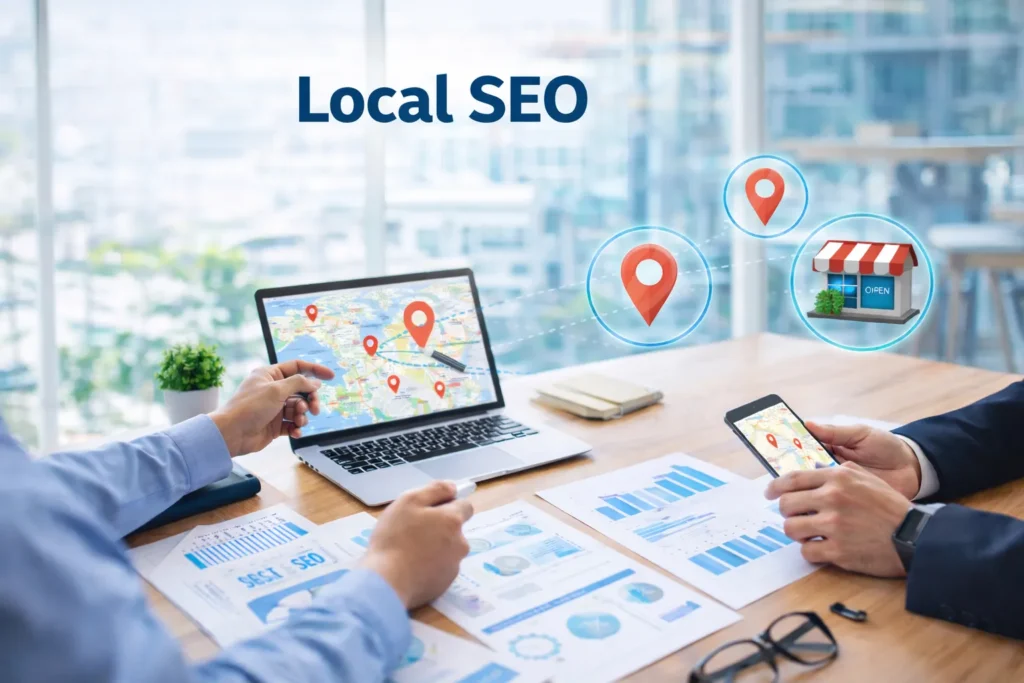
SEO is an effective, measurable channel for small businesses when approached strategically; it increases visibility in organic search, targets buyer intent, and compounds value over time in a way paid ads cannot always match. By prioritizing a solid technical foundation, locally optimized listings, and a consistent content strategy that answers real customer queries, small operators can capture qualified leads with predictable cost-per-acquisition advantages and demonstrable return on investment.
Execution matters: an amateur approach yields uneven results, but disciplined keyword research, on-page optimization, and localized link-building produce steady improvements in rankings and organic traffic. Measured against business goals, SEO should be treated as a long-term growth asset—one that scales with effort and data-driven refinement, and that complements paid channels and offline customer relationships for sustainable revenue growth.
How to Improve Local SEO for Small Businesses?
To improve local SEO for small businesses, prioritize complete and consistent Google My Business listings and ensure your NAP (Name, Address, Phone) is uniform across directories and citations. Maintain accurate hours, categories, and a concise business description that incorporates geo-targeted keyword optimization to signal relevance for nearby searches. Solicit and respond professionally to online reviews, since volume, recency, and rating influence local rankings and click-through rates.
Optimize on-page elements by embedding location pages with schema markup, structured data, and optimized title tags and meta descriptions that include neighborhood-specific terms. Improve mobile speed and usability to capture on-the-go local intent, and pursue high-quality neighborhood or industry-specific local backlinks and partnerships to increase authority. Monitor performance with analytics and local rank-tracking, then iterate based on search trends and customer behavior to sustain growth in local visibility.

How To Do SEO for a Local Business?
Implementing local SEO for a small business begins with optimizing your Google Business Profile—complete every field, select accurate categories, and maintain consistent NAP (Name, Address, Phone) across the web so search engines trust your location signals.
On-site work requires focused on-page optimization: include city and neighborhood modifiers in title tags, meta descriptions, headers, and natural body copy, and add schema markup for local businesses to surface in rich results. Ensure pages load fast and are mobile optimized because local searches are predominantly mobile.
Off-site efforts concentrate on building authoritative local links and local citations from chambers, directories, and industry partners, plus a proactive strategy to solicit and respond to reviews to improve prominence and click-through rates. Monitor rankings, traffic, and conversions with analytics and refine targeting based on keyword performance and user behavior for continuous local visibility gains.

Does SEO Help Your Business?
In a competitive digital marketplace, SEO is a strategic investment that measurably improves online visibility and attracts qualified visitors. By optimizing site architecture, content relevance, and backlink profiles, SEO increases organic rankings on search engines, which reduces reliance on paid channels and lowers customer acquisition costs over time.
From a performance perspective, well-executed SEO drives sustained growth in organic traffic, enhances user engagement metrics, and provides data-driven insights into customer intent. These signals not only improve search placement but also support incremental gains in conversion rate when paired with robust on-site experience and clear calls to action.
Strategically, businesses that integrate SEO with content strategy, technical optimization, and analytics reporting realize higher long-term ROI, better brand authority, and increased market share — making SEO a core component of scalable digital growth.
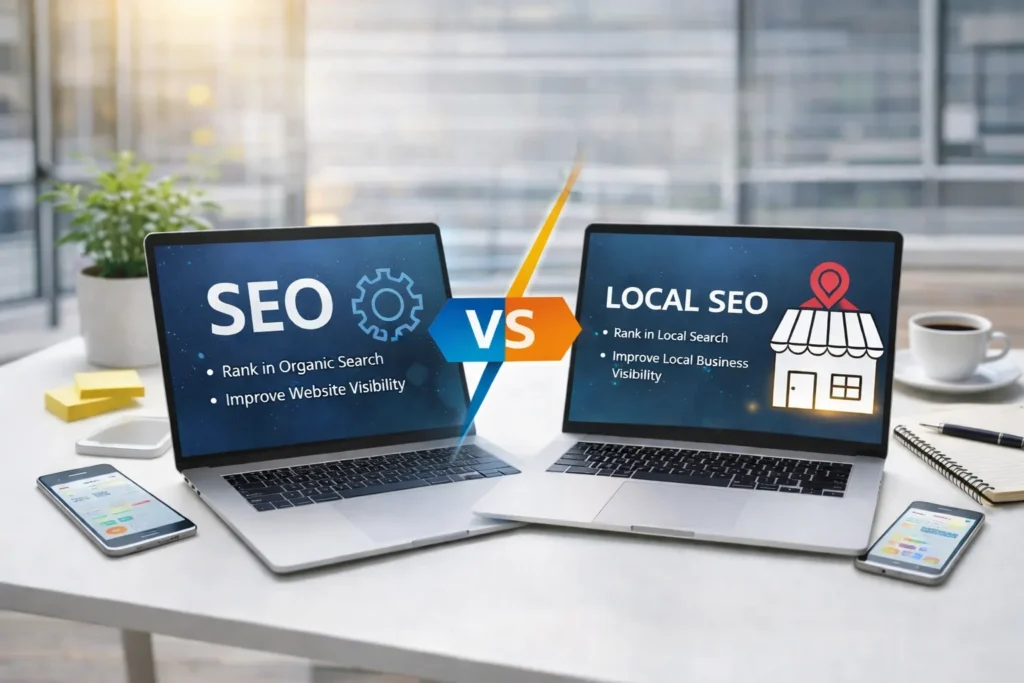
What is the Difference Between SEO and Local SEO?
SEO is a broad set of strategies aimed at improving a website’s visibility across search engines by optimizing site architecture, content relevance, backlink authority, and technical performance; it targets a national or global audience and emphasizes organic ranking signals and competitive keyword strategies.
Local SEO is a specialized subset of SEO that focuses on driving visibility within a defined geographic area by optimizing for localized search intent—this includes Google Business Profile optimization, consistent NAP (name, address, phone) citations, localized content, and proximity/relevance signals used by search engines to rank nearby businesses.
From an execution standpoint, metrics and tactics differ: standard SEO prioritizes organic traffic, domain authority, and long-tail rankings, whereas Local SEO prioritizes map pack presence, local reviews, citation accuracy, and conversion signals like calls and store visits, making measurement and strategy distinctly local versus broad in scope.
How to Find Local Keywords That Bring You Customers?
Identifying local keywords that convert starts with analyzing customer intent: map the queries customers use at different funnel stages, focusing on transactional phrases like “near me”, “buy”, or “best” plus your service and location. Use tools such as Google Keyword Planner, Google Search Console, and local search platforms to extract volume and click trends, and prioritize long-tail modifiers that indicate immediate need (e.g., “emergency”, “same day”).
Combine this data with on-the-ground signals: review search terms in your Google My Business insights, customer reviews, call logs, and chat transcripts to surface colloquial phrases and neighborhood names that tools miss. Validate and refine by testing optimized landing pages and tracking conversions to ensure selected local keywords deliver measurable customer acquisition.

How to Reach Your Local Audience?
To effectively reach your local audience, focus on building a strong presence in local search and directories: optimize your website for local SEO, claim and regularly update your Google Business Profile, and ensure consistent NAP (Name, Address, Phone) data across platforms. Prioritize content that addresses neighborhood-specific needs and keywords, and use schema markup to enhance visibility.
Leverage targeted channels and community touchpoints: deploy hyper-local paid advertising with geo-fencing, engage in local social media groups, partner with complementary businesses, and participate in events or sponsorships that increase offline awareness. Encourage and showcase authentic customer reviews to build trust.
Measure and iterate: track performance with localized analytics, A/B test offers and messaging, and refine audience segments based on behavioral data. A disciplined, data-driven approach combined with genuine community engagement delivers sustained local relevance and growth.

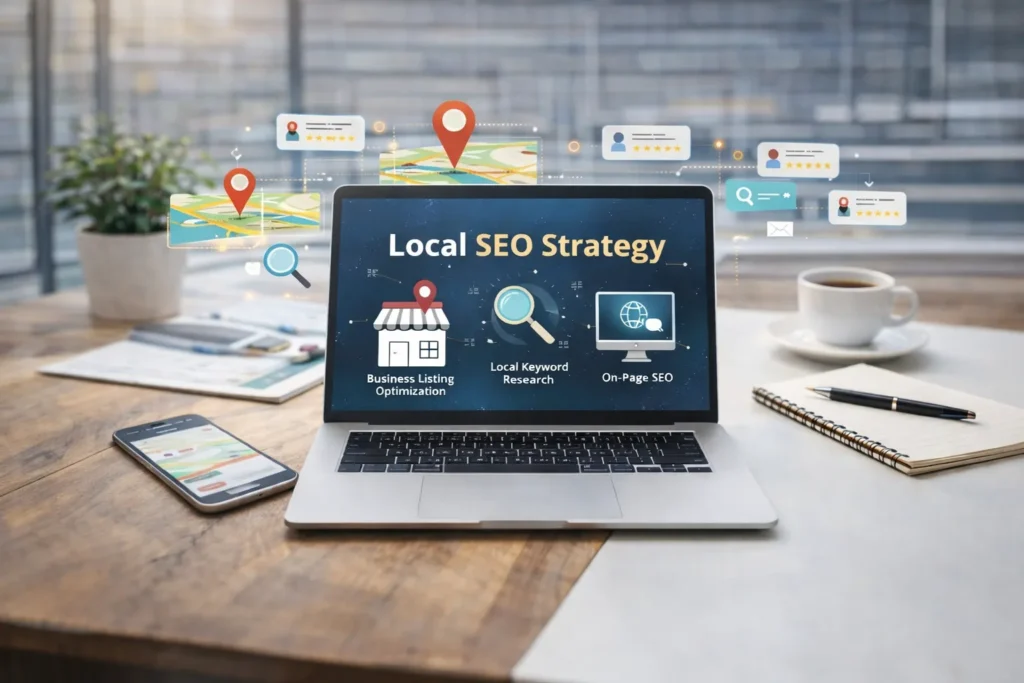
How Long Does a Local SEO Strategy Take?
In practice, a realistic Local SEO timeline depends on baseline visibility, competition, and resource allocation; typically, foundational improvements such as Google Business Profile optimization, on-page citation corrections, and initial keyword targeting begin to show measurable local traffic increases within 3–6 months. Early wins often come from fixing NAP consistency, improving primary location pages, and generating a steady stream of verified customer reviews.
Sustained ranking gains and dominance in competitive markets require ongoing work—regular content creation, local backlink acquisition, and continuous review management—so expect a more durable outcome over 6–12 months or longer. Monitoring, testing, and adapting to algorithm changes are essential; therefore, treat Local SEO strategy as a continuous investment rather than a one-time project to achieve and maintain top local visibility.
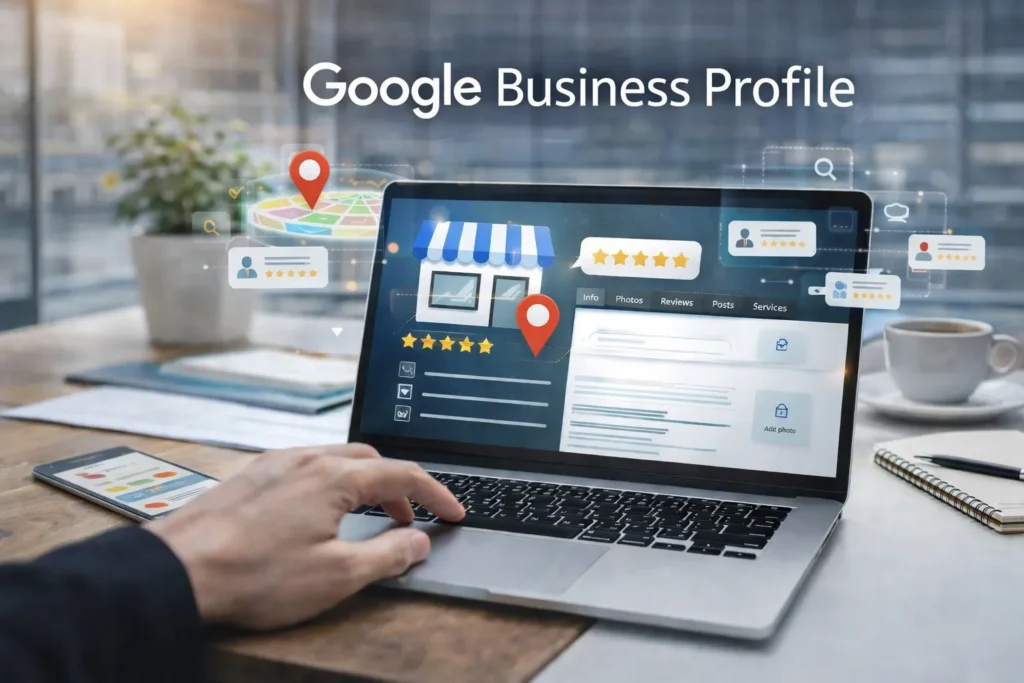
How to Optimize Your Google Business Profile?
Optimizing your Google Business Profile begins with complete and accurate core information: use the exact business name used offline, select precise primary and secondary categories, and verify regular and holiday hours, address, and phone to maximize trust and search relevance.
Populate the profile with high-quality, regularly updated photos, an optimized, concise business description incorporating target local keywords, and a link to the canonical website landing page; enable messaging and list relevant attributes to improve conversion signals.
Proactively manage reputation by soliciting and responding to reviews, publishing timely posts for offers or events, and monitoring insights to iterate on performance—use data to refine categories, services, and content cadence. Together, these practices strengthen local visibility, improve click-through and direction requests, and ensure your Google Business Profile drives qualified local traffic and measurable business outcomes.
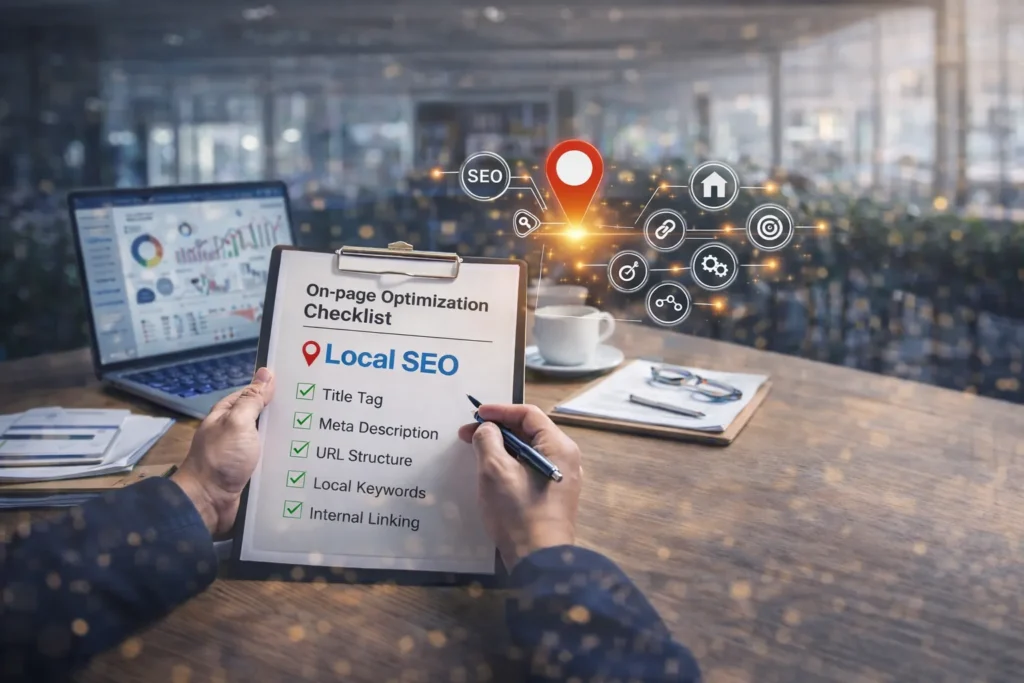
On-Page Optimization Checklist for Local SEO
Start with technical essentials: optimize the Title Tag and Meta Description to include primary local keywords and the city name, ensure a single descriptive H1, and use clean, readable URL Structure. Verify consistent NAP (Name, Address, Phone) across the site and citations, and implement Schema/Structured Data for LocalBusiness and service pages to improve SERP visibility.
Focus on performance and accessibility: prioritize Mobile Optimization, reduce load times for Page Speed, and add descriptive Image Alt Text with local modifiers. Create localized, authoritative content that answers intent—service-area pages, FAQs, and case studies—and naturally incorporates geo-modified keywords.
Conversion and trust signals: link internally to key local pages, encourage and display Reviews, and integrate a verified Google Business Profile. Regularly audit on-page elements, schema validity, and analytics to iterate improvements based on local ranking and engagement metrics.
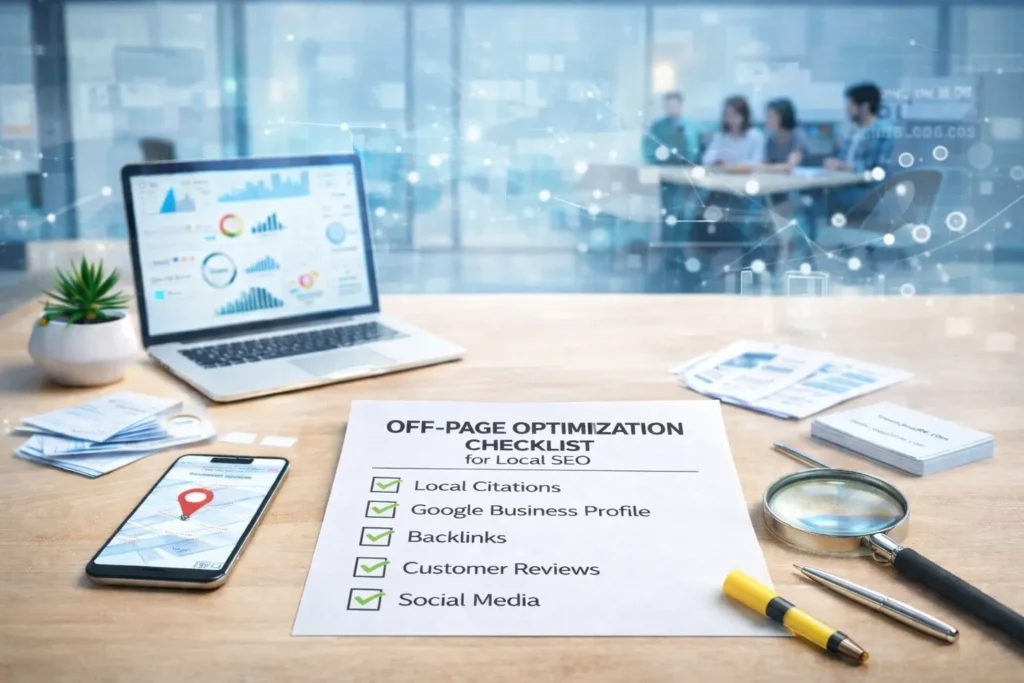
Off-Page Optimization Checklist for Local SEO
Implement an Off-page optimization checklist for local SEO by prioritizing a verified and optimized Google Business Profile, consistent NAP (Name, Address, Phone) across all local citations, and targeted local link building from authoritative community sites and industry partners.
Systematically solicit and respond to online reviews on primary platforms, monitor and dispute inaccurate citations, and use local schema markup to enhance search visibility. Maintain active and branded social profiles, leverage hyperlocal content and events to earn mentions, and track referral traffic and rankings with geo-specific analytics.
Finally, audit backlink quality regularly to remove spammy links, document outreach efforts, and establish a repeatable process for citation discovery and review acquisition to sustainably improve local rankings and conversion rates.
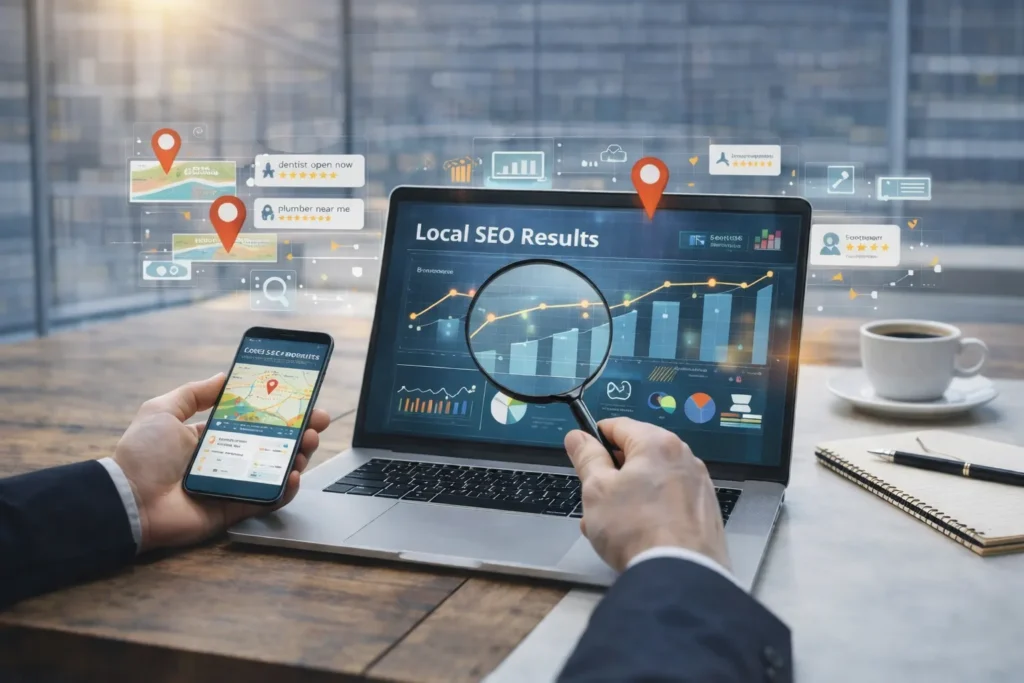
How to Monitor Your Local SEO Results?
Begin by tracking rankings and visibility for targeted keywords in your service area using a reliable rank-tracking tool; monitor both organic and map pack positions to understand where your Local SEO efforts move the needle. Complement this with Google Business Profile insights — regularly review impressions, search queries, and profile actions to see how users discover and engage with your listing.
Next, measure engagement and outcomes in analytics platforms: segment organic traffic by location, track landing-page behavior, click-through rate (CTR), and local conversions (calls, direction requests, form submissions). Correlate changes in traffic and conversions with on-page updates, citations, and backlink activities to identify causation. Finally, monitor reputation and local signals: audit and respond to reviews, maintain consistent citations, and use periodic local competitor benchmarking. Produce monthly dashboards combining these metrics to inform iterative testing and strategy refinement.
Top 3 Local SEO Ranking Factors
As local search continues to evolve, three core factors consistently drive both visibility and conversions. First and foremost, Google Business Profile optimization remains essential. Accurate business categories, fully completed attributes, geotagged images, regular posts, and precise service-area settings all work together to directly influence map visibility and local-pack rankings.
Equally important, authoritative and consistent citations play a critical role in strengthening local trust signals. Maintaining consistent NAP (Name, Address, Phone) information across directories, along with earning high-quality backlinks from locally relevant websites, reinforces business legitimacy and prominence within search algorithms. As a result, this consistency reduces confusion about a business’s location and services while improving local ranking stability.
Finally, social proof and on-site relevance function most effectively when aligned. High-quality customer reviews and strong ratings, combined with locally optimized landing pages, structured schema markup, and keyword-targeted content, send clear signals of relevance and user satisfaction. Taken together, these three pillars—profile optimization, citation consistency, and reviews supported by on-page relevance—form the strategic foundation of effective local SEO and should be continuously monitored, tested, and refined to achieve measurable performance gains.

Local SEO Tools are indispensable for practitioners aiming to capture geographically relevant search visibility; they streamline tasks such as keyword research for local intent, automated citation management, and verification of consistency across local listings. Modern platforms integrate rank tracking by ZIP code or city, enabling precise measurement of SERP fluctuations and campaign impact.
Beyond monitoring, advanced solutions provide automated review management workflows and sentiment analysis, and they surface actionable issues like missing hours or duplicate listings that harm discoverability. Integration with analytics and POS data allows attribution of in-store visits and conversions, while support for schema markup and structured data accelerates rich result eligibility. For teams scaling multi-location operations, a combined suite that centralizes these capabilities reduces manual overhead and improves local search ROI.
Local SEO Tips & Strategies
Implement a disciplined Local SEO strategy by optimizing your Google My Business profile, ensuring consistent NAP (Name, Address, Phone) data across directories, and prioritizing authoritative local citations. Focus on content localization—create pages and blog posts that reflect neighborhood landmarks, service areas, and locally relevant keywords while maintaining technical hygiene like fast load times and mobile optimization.
Complement on-page work with reputation management: actively solicit and respond to reviews, and use schema markup such as structured data to increase visibility in rich results and local packs. Monitor performance with analytics and rank-tracking tools to iterate on keyword priorities and backlink opportunities from reputable regional sites. By combining precise local signals, user-focused content, and measurable optimization cycles, you create a resilient, scalable approach to improving local search prominence and conversion rates.

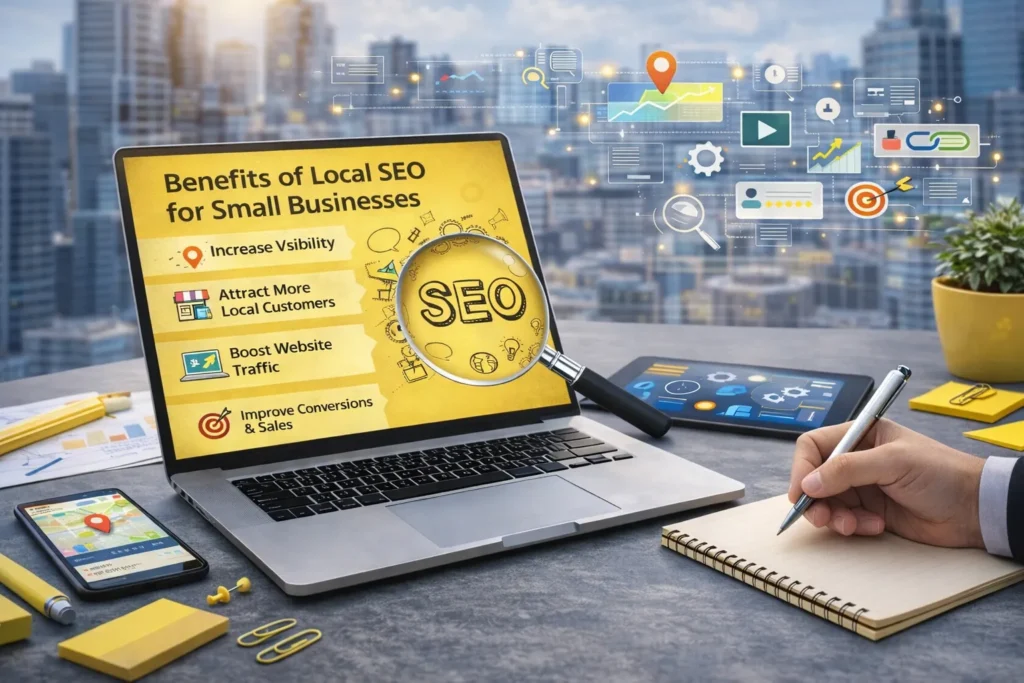
What are the Benefits of Local SEO for Small Businesses?
Local SEO offers disproportionate value to Small Businesses by improving hyperlocal search visibility so potential customers find them precisely when intent and proximity align. Optimizing website content, metadata, and directory listings increases relevance for queries tied to neighborhoods, services, and operating hours, which drives higher-quality traffic and reduces acquisition costs.
A focused local strategy boosts in-store foot traffic and online-to-offline conversions by leveraging accurate NAP data, strong backlinks, and consistent citations, while profiles like Google My Business and curated schema improve click-through rates and map prominence.
Additionally, prioritizing mobile-friendly pages, reputation management, and targeted local keywords amplifies trust via timely customer reviews, increases repeat patronage, and delivers measurable ROI through localized analytics — making Local SEO an essential, cost-effective growth channel for Small Businesses.
Conclusion
Local SEO is one of the most powerful growth strategies available to small businesses. By focusing on geographic relevance, trust signals, user engagement, and consistent optimization, businesses can attract high-intent customers who are ready to take action. Unlike broad SEO, local SEO connects your brand directly with nearby audiences at the exact moment they need your services.
This guide covered every essential local SEO strategy, from profile optimization and content creation to reviews, backlinks, community involvement, and long-term maintenance. When applied consistently, these tactics help small businesses improve visibility, generate more leads, and build lasting local authority. A strong local SEO foundation does not just improve rankings; it creates sustainable growth rooted in real customer relationships within your community.
Read more about: Improve WordPress Site’s SEO With 13 Best WordPress Plugins
In selecting an integrated e-commerce platform, prioritize performance, schema support, and extensibility to ensure long-term SEO success, because technical foundations determine how effectively search engines crawl and index your product catalog. Optimizing your online store requires a disciplined process combining keyword strategy, UX enhancements and structured data to serve both search engines and users, leveraging analytics to refine category hierarchies and meta templates for measurable increases in traffic to your ecommerce site; complement these efforts with automation and auditing via specialized ecommerce SEO tools to maintain rankings, reduce friction in checkout, and scale organic growth across markets.
What is e-commerce SEO?
eCommerce SEO is the practice of optimizing an online store so search engines can find, understand and rank its product pages, category pages and content, to drive organic traffic and increase sales; it combines technical SEO (site speed, crawlability, structured data), on-page optimization (keyword-focused product titles, unique descriptions, meta tags), content marketing (buying guides, blog posts, FAQs) and off-page signals (link building, reviews) to build visibility and trust, while also aligning with conversion rate optimization and analytics to ensure traffic converts into orders — in short, search engine optimization for ecommerce — how do online stores grow organic traffic and sales is achieved by integrating these tactics to attract qualified visitors and turn them into customers.

eCommerce SEO and Marketing Best Practices
For a e-commerce site to drive traffic and grow your online store, combine search engine optimization fundamentals with practical e-commerce SEO tools like surfer seo and Google Search Console to track SEO performance, search volume, and search terms. Technical foundations — ecommerce site architecture, page load, and technical SEO ensure crawlability — are vital in ecommerce success and help search engines index product and category pages and content on your website.
Content and conversion tactics focus on product page optimization, clear meta descriptions and target keyword usage, internal linking, and long-form content, including long-tail keyword targeting to attract potential customers from organic search and search engine results pages. An SEO campaign or ecommerce SEO campaign led by an SEO consultant or SEO agency uses SEO tools to measure SEO rankings, seo benefits, and ecommerce conversion, ensuring successful SEO and successful ecommerce SEO; remember, SEO doesn’t stop — continuous SEO improvements maximize ecommerce SEO efforts and traffic to your e-commerce business on any e-commerce platform, making sure your website attracts the best ecommerce customers through smarter SEO tactics and helps search engines understand your search results positioning.

How To Optimize Your Product Pages to Boost Sales
To maximize conversions, focus on user experience and content that connects users and search engines, ensuring product descriptions, images, and reviews answer intent and move visitors closer to making a purchase. Integrate structured data to increase the chance of appearing in rich results and improve search engine rankings while balancing on-page SEO with thoughtful internal linking across pages on your site. Use A/B testing and use tools like heatmaps and analytics to identify friction and opportunities on your e-commerce platform.
For sustained growth, align SEO and user needs to optimize your online presence: optimize titles, meta descriptions, and load speed to improve your ecommerce SEO and maximize your e-commerce SEO. Complement organic efforts with targeted paid ad campaigns to drive traffic to your e-commerce and increase the chances of ranking for competitive terms, establishing best practices for best e-commerce SEO across your ecommerce business, and boosting overall website traffic.

How To Promote Your Online Store With Zero Budget
To promote your online store with zero budget, adopt a disciplined content and community-first strategy: optimize product listings for search intent, create shareable micro-content (short videos, image carousels) and syndicate it across social profiles and niche forums, and leverage user-generated content and reviews to build social proof. Integrate free analytics and iterate rapidly on listings and keywords provided by your ecommerce platform to increase organic visibility, and use email automation with value-driven sequences to convert warm leads.
Focus on partnerships and cross-promotions with complementary creators or micro-influencers on revenue-share terms, participate in relevant online communities to provide expert advice rather than blatant promotion, and track conversion metrics to refine tactics — these low-cost activities scale visibility and sales without advertising spend.

How to Build an eCommerce SEO Strategy?
Developing an effective eCommerce SEO strategy begins with rigorous keyword research to align transactional intent with high-value product and category targets, followed by prioritizing crawlable site architecture that reduces depth to commercial pages and enforces canonicalization and hreflang where applicable.
Optimize individual product pages and category templates for unique, conversion-focused metadata, structured data (Product, Review, Offer), and persuasive, search-aligned content that balances user intent with long-tail opportunity.
Invest in robust technical SEO — fast load times, mobile-first rendering, eliminating duplicate content, and XML sitemaps — to ensure search engines can index and rank your inventory reliably.
Finally, integrate a measurable content strategy and ethical link building with continuous analytics-driven testing to scale organic visibility and improve conversion metrics over time.

How Do You Optimize Product Pages For Higher Rankings?
To achieve higher rankings, begin with on-page fundamentals: craft descriptive title tags and compelling meta descriptions that incorporate primary keywords naturally, optimize URL structure for readability, and write unique, benefit-focused product descriptions that avoid manufacturer boilerplate. Prioritize technical and user-experience factors by improving site speed, ensuring robust mobile optimization, implementing canonical tags to prevent duplication, and adding comprehensive product schema and structured data to surface rich results.
Support discoverability and conversion through high-resolution images with descriptive ALT text, descriptive variant attributes, visible customer reviews, and strategic internal linking from category pages. Monitor performance with analytics and search console signals, iterate using A/B testing, and align content with intent to maintain relevance. This disciplined, data-driven approach consistently elevates product page authority and rankings.

Why is On-Page SEO Different For eCommerce Websites?
On-page SEO for eCommerce sites demands a different discipline because the indexable inventory, user intent, and conversion signals are fundamentally transactional rather than purely informational. Product and category pages require granular optimization of title tags, meta descriptions, and header structure to reflect long-tail commercial queries and to distinguish thousands of similar SKUs, while also minimizing duplicate content across filtered or paginated listings.
Additionally, technical elements such as canonical tags, faceted navigation management, fast mobile rendering, structured data like schema markup, and enriched snippets become critical for driving click-through and purchase behavior. Site architecture must prioritize crawl budget and internal linking to surface high-value pages, and content must balance persuasive copy with unique, keyword-driven descriptions to satisfy both search engines and shoppers. These combined requirements make on-page SEO for eCommerce a specialist practice that integrates SEO, UX, and merchandising strategies.
What Are The Technical SEO Essentials for eCommerce Stores?
For eCommerce platforms to perform in search, prioritize robust on-site foundations: implement HTTPS site-wide, optimize page speed through image compression and efficient caching, and ensure mobile-first indexing compatibility with responsive layouts and touch-friendly UI. Maintain an accurate XML sitemap, a strict robots.txt policy, and use canonical tags to prevent duplicate content from product variants and filtered lists.
Advanced technical controls protect crawl efficiency and visibility: manage crawl budget by blocking low-value parameterized URLs and using crawl-delay where needed, apply structured data (schema.org) for products and reviews to improve SERP features, and implement correct hreflang for international stores. Finally, validate pagination and faceted navigation handling, and monitor search console for indexing issues to keep the catalog discoverable and performant.

Keyword Research for Ecommerce SEO
Effective keyword research for ecommerce SEO begins with mapping high-intent queries to specific funnel stages and product categories, prioritizing transactional and long-tail terms that indicate purchase readiness. Use a combination of search volume, CPC, and competitive difficulty to inform target selection while validating with site analytics and search console data to capture real-world demand.
Align prioritized keywords with optimized product pages, category descriptions, and structured data, and iterate continuously as trends and seasonality shift to sustain visibility and conversion performance.

The Benefits Of Organic Traffic For An E-commerce Website
Investing in organic traffic delivers durable growth for an ecommerce site by attracting high-intent visitors through scalable SEO strategies that reduce reliance on paid channels and lower long-term cost-per-acquisition.
Organic visitors often demonstrate stronger engagement and higher conversion rates because they discover product pages via relevant content and search queries, improving session quality and funnel efficiency while increasing average order value.
Consistent organic visibility also builds brand authority and trust, boosting repeat purchases and customer lifetime value; combined with improved analytics and content assets, this creates a compounding competitive advantage for sustainable revenue growth.

On-Page SEO for E-commerce Websites
Effective on-page SEO for ecommerce websites begins with precision: optimize product pages using unique, keyword-focused meta titles and meta descriptions, descriptive headings, and concise, benefit-driven product copy that aligns with user intent and purchase signals.
Technical hygiene is equally critical — implement structured data such as schema markup for products and reviews, ensure fast site speed, and enforce canonical tags to prevent duplicate content across variant URLs.
Finally, prioritize user experience through clear internal linking, accessible navigation, and thorough mobile optimization, measuring results with analytics to iterate on conversion-focused content and linkage strategies.
Local SEO for E-commerce (If Applicable)
Local SEO for Ecommerce demands systematic optimization of product and category pages to capture intent-driven, geographically relevant queries and improve visibility in local search results. Implementing consistent NAP data, enhancing listings with high-quality images and reviews, and maintaining an optimized Google Business Profile drives conversion-ready traffic for stores with physical presence.
Use schema and structured data to surface inventory availability and pickup options, and measure local performance to iterate on tactics that align online catalog strategy with neighborhood demand.

Why is SEO a Game-changer For Online Stores In 2025?
SEO is a game-changer for online stores in 2025 because it aligns technical optimization, intent-driven content and AI-powered personalization to place products where buyers are already searching.
By improving crawlability, mobile performance, and semantic relevance, SEO drives sustainable organic visibility, lowers customer acquisition costs, enhances user experience, and increases conversion efficiency—making it an essential strategic investment for retailers competing in a saturated, data-driven marketplace.

How Can Blogging Improve SEO for Your Online Store?
Blogging enhances SEO for your online store by producing fresh, relevant content that targets both primary and long-tail keywords, improving indexation and topical authority. Strategically optimized posts attract organic traffic and earn quality backlinks, while addressing user intent increases dwell time and conversion signals for search algorithms. Consistent internal linking and analytics-driven topic selection strengthen site architecture, distribute page authority, and ensure your online store ranks more competitively for buyer-focused queries.
Blogging strengthens SEO for your online store by consistently publishing fresh, relevant content that targets both primary and long-tail keywords. As a result, search engines can index more pages, better understand your topical authority, and associate your store with high-intent search queries.
Moreover, strategically optimized blog posts help attract qualified organic traffic and naturally earn high-quality backlinks over time. By directly addressing user intent and answering buyer-focused questions, blog content increases dwell time and engagement, which sends positive relevance and trust signals to search algorithms.
Additionally, consistent internal linking combined with analytics-driven topic selection improves site architecture, distributes page authority more effectively, and guides users toward key product and category pages. Ultimately, this structured approach ensures your online store ranks more competitively for commercial and transactional searches, driving sustainable traffic and higher conversions.
How Long Does eCommerce SEO Take To Work?
eCommerce SEO timelines vary, but expect meaningful movement in organic visibility within 3–6 months and more substantial, business-impacting gains in 6–12 months as search engines index optimizations and user signals accumulate.
Initial wins come from addressing technical SEO issues, improving site speed and crawlability, and optimizing category pages—these can yield faster rankings improvements, while content creation and category/product optimization build mid-term authority.
Long-term performance depends on competitive landscape, backlink acquisition, conversion optimization, and consistent testing; sustainable organic traffic and measurable ROI typically require ongoing investment and 12+ months for dominant market positions.

How To Build Trust and Authority Through Backlink Building?
Backlink building is a strategic tool to establish trust and authority when you prioritize link quality over quantity, pursuing links from reputable, topically relevant sites.
Produce exceptional content that earns editorial links, use natural anchor text, and foster genuine relationships with industry publishers.
Measure referral traffic, domain metrics, and conversion signals to continually refine outreach and protect long-term authority; document outreach, disavow toxic links, and align internal linking to amplify trust signals consistently.
Why is On-Page SEO Different for eCommerce Websites?
On-page search engine optimization for e-commerce differs because the volume and variability of product pages and filters demand rigorous site architecture and crawl efficiency.
Merchants must optimize for transactional user intent, unique descriptions, and conversion-focused signals like schema and quick load times.
Canonicalization, pagination and faceted navigation require disciplined canonical tags and indexation strategies to prevent duplication, while rich snippets via structured data directly impact click-through and revenue metrics and long-term retention outcomes across channels consistently.

Five Elements Of An Effective e-commerce SEO Strategy
An effective ecommerce SEO strategy rests on five coordinated pillars:
- Technical SEO: ensuring crawlability, fast page speed, canonicalization, and structured data
- Keyword Strategy: prioritizing transactional intent, long-tail product queries, and category-level search demand
- Content Optimization: unique product descriptions, high-quality imagery, and intent-driven metadata to reduce duplicate content and improve conversions
- User Experience (UX): mobile-first design, intuitive navigation, faceted search, and clear conversion paths to lower bounce rates and increase dwell time
- Link Building & Authority: earning relevant editorial links, partnerships, and PR to boost domain trust and ranking resiliency
When these five elements operate together — strategic keyword targeting, technical site health, compelling product content, authoritative link acquisition, and user-focused conversion optimization — you create a unified growth engine for search engine optimization for ecommerce — how do online stores grow organic traffic and sales; by measuring performance with prioritized KPIs (organic sessions, keyword rankings, conversion rate, average order value, and revenue per visitor) and running iterative A/B tests across product pages, category pages, and checkout flows, teams build a continual feedback loop that identifies winning variations, removes friction, and reallocates resources to the highest-impact opportunities, enabling scalable increases in organic traffic, higher basket values, improved lifetime customer value, and sustained competitive visibility in fast-moving ecommerce markets.

Conclusion
In summary, effective SEO for e-commerce — how do online stores grow organic traffic and sales — relies on a blend of technical optimization, strategic keyword and content strategy, strong product pages and schema, fast mobile-friendly site performance, and ongoing link-building and user-experience improvements. By prioritizing customer intent, optimizing for search engines, monitoring analytics, and iterating based on data, online stores can steadily increase organic visibility, attract higher-quality traffic, and convert that traffic into sustainable sales growth.
In short, SEO for e-commerce — how do online stores grow organic traffic and sales? By combining on-page optimization, strong technical foundations, and focused content strategies, and then measuring performance and iterating based on data. Prioritize clear category structures, optimized meta tags, fast mobile experiences, and content that answers buyer intent to steadily increase organic visibility and conversions.
Read more about: Shopify SEO Guide: SEO for E-commerce Store Optimization
Have you ever wondered how some businesses seem to know exactly which keywords work, which pages drive conversions, and which content updates directly improve rankings? The truth is, successful websites do not rely on guesswork. They rely on SEO analytics—a structured, data-driven approach that reveals how your website performs in search engines and what actions can increase visibility.
In 2025, SEO analytics has become more advanced, more integrated with AI, and more focused on understanding user behavior. Search engines evaluate not only your keywords and backlinks, but also how users interact with your content, how efficiently your site loads, and how well it satisfies search intent. Without proper analytics, you may miss critical insights that determine whether your site grows or stagnates.
This step-by-step guide breaks down the fundamentals, tools, and advanced strategies you need to analyze SEO data with confidence. Whether you’re improving rankings, optimizing content, or building a long-term strategy, SEO analytics gives you the clarity needed to make smarter decisions.
What Is SEO Analytics?
As an expert, a guide to SEO analytics explains how search engine optimization and web analytics converge: SEO analytics helps you measure organic traffic, keyword ranking, click-through rate, and conversion rate across search engine results. Using Google Search Console, Google Analytics 4, and Google Search Console data alongside Google Ads, tools like Looker Studio for SEO(formerly Google Data Studio), and other different tools, an SEO specialist can centralize data points into SEO dashboards and analytics dashboards to produce an actionable SEO report.
A comprehensive approach—combining technical seo, on-page SEO, off-page SEO, and local SEO—relies on tracking tools, analysis tools, and keyword research tools to run technical SEO audits, automate workflows (automate SEO,) and refine optimization. Whether using an SEO analytics tool, an all-in-one SEO tool, or multiple free tools, populate dashboard templates and reporting dashboards to monitor SEO performance, SEO metric,s and organic search traffic —this SEO toolkit empowers SEO efforts, yields SEO insights, and helps you optimize your SEO for stronger search traffic and measurable ROI in any SEO campaign.

How does Analytics Improve SEO?
Analytics enables precision in SEO by combining marketing analytics and performance analytics so teams can track key metrics on the search engine results page and overall search results. Effective use of SEO software, SEO analysis tools, and a centralized reporting tool helps you understand which pages and queries drive traffic, making it possible to use your SEO data to improve rankings for users trying to rank on google.
A rigorous approach — where seo analytics is the process of collecting data about website behavior — supports both local SEO and advanced SEO strategies. Multiple tools, including Webmaster Tools, provide the raw signals; combined analysis of SEO, SEO analytics reporting, and comprehensive SEO reviews uncover opportunities and inform key SEO actions. In short, analytics enables strong SEO, helps you master optimization, and makes SEO services and tactical changes more effective and measurable.
How to Add Key Metrics to Track in Your SEO Analysis?
To effectively measure progress in search engine optimization, prioritize core metrics visible in Google Search Console and Google Analytics 4, where impressions, clicks, and session behavior inform an overall dashboard for your SEO campaign. An SEO analytics tool or general SEO tool aggregates critical data points — click-through rate, average position in search engine results, bounce rate, and organic search traffic — which are important for SEO.
Combine those outputs with attribution from Google Ads and conversions to monitor conversion rate, while running regular technical SEO audits to surface issues in technical SEO that impede indexing. Webmaster tools and other analysis tools provide diagnostics and SEO insights that are helpful for SEO.
To master SEO analytics, use tools like site crawlers and log analysis to validate hypotheses; these combined signals show where your SEO focuses should be and demonstrate how SEO analytics can help optimize performance across campaigns.

How To Use Analytics to Develop SEO Strategies?
To develop an analytics-driven approach to SEO, begin by aligning measurable KPIs—organic traffic, conversion rate, bounce rate, dwell time—and instrument your site with robust tracking (GA4, Search Console, server logs) to collect reliable behavioral and query data. Use segmentation to separate new versus returning users, device types, and landing page cohorts so you can identify specific content or technical issues affecting performance.
Start by performing detailed keyword performance and search intent analysis to identify where the strongest optimization opportunities exist. Pay close attention to high-impression queries that generate visibility but suffer from low click-through rates, as these often indicate issues with titles, meta descriptions, or intent mismatch. At the same time, evaluate pages that show strong engagement metrics such as time on page or scroll depth but deliver low conversions, which signals friction in content flow, calls to action, or user experience.
In parallel, conduct a thorough content gap analysis by comparing your keyword coverage and topic depth against top-performing competitors in your niche. This helps uncover missed opportunities, underserved search intent, and areas where additional content or improved structure can strengthen topical authority.
Next, apply iterative testing to turn insights into measurable gains. Test title tags and meta descriptions to improve CTR, refine content sections to better align with user intent, and adjust internal linking to guide users toward high-value pages. As these changes roll out, closely monitor attribution paths and conversion data to confirm that optimizations are influencing user behavior across the funnel.
By consistently closing the loop between analytics insights and tactical execution, you establish a repeatable SEO process driven by data rather than assumptions. Over time, this approach enables scalable improvements across technical SEO, content quality, and user experience, ensuring long-term performance growth backed by evidence, not intuition.

The Ultimate Guide To SEO Tracking
The Ultimate Guide To SEO Tracking begins with a strategic framework: define measurable KPIs (organic traffic, conversion rate, visibility) and ensure data integrity by configuring Google Analytics and Search Console correctly, including consistent tagging and filtered views to eliminate bot noise.
Next, implement granular tracking—use event tracking, UTM parameters, and server-side collection to capture user intent, content engagement, and technical issues; correlate crawl logs with ranking shifts to isolate causes rather than symptoms.
Finally, operationalize insights through automated dashboards, anomaly detection, and a cadence of hypothesis-driven experiments: prioritize high-impact pages, attribute gains across channels, and report outcomes to stakeholders. Continuous validation, privacy-compliant data practices, and a focus on actionable metrics transform raw numbers into sustained organic growth.

SEO Analytics Tools to Use
For rigorous measurement and tactical decision-making, prioritize platforms that provide both behavioral and search visibility: Google Analytics for user behavior and conversion attribution, and Google Search Console for indexing status, query performance, and manual action alerts. Combine these with enterprise-grade keyword and competitive intelligence from SEMrush or Ahrefs to model opportunities and monitor backlink quality.
Use technical crawlers and site-audit tools to surface architecture and rendering issues—Screaming Frog for deep crawl diagnostics and Moz Pro for prioritized on-page recommendations. For reporting and visualization, integrate data into Looker Studio to build reusable dashboards that align SEO KPIs with business outcomes. Supplement quantitative analytics with qualitative tools such as Hotjar to observe user intent and friction. Finally, incorporate Bing Webmaster Tools to capture search signals beyond Google and ensure a comprehensive, channel-agnostic SEO analytics stack.
The Best SEO Analytics Tools for 2025 (Free & Paid)
In 2025, SEO practitioners should balance depth and scalability by combining Free and Paid solutions: Google Analytics 4 and Google Search Console remain indispensable for behavioral and search performance baselines, while lightweight crawl diagnostics are well served by the Free tier of Screaming Frog.
For advanced competitive analysis and keyword intent modeling, premium platforms like Semrush and Ahrefs deliver comprehensive backlink graphs, rank-tracking, and content gap discovery; their APIs and integrations justify enterprise licenses when scaling programs.
Specialized tools such as Hotjar for UX insights and Botify for large-site crawl intelligence complement the stack; prioritize solutions with granular attribution, automated reporting, and privacy-compliant data handling. A pragmatic 2025 approach layers robust Free monitoring with targeted paid investments to convert technical signals into measurable ROI.
 into
into
Is SEO Part Of Google Analytics?
SEO is not a distinct module within Google Analytics, but the platform is indispensable for measuring the performance of your search engine optimization efforts.
Through Google Analytics, you can evaluate organic traffic trends, landing page behavior, bounce rates, and conversion funnels that reflect the effectiveness of on-page and technical SEO work. Integrations with Google Search Console and the availability of acquisition reports allow specialists to correlate keyword-driven impressions and clicks with user engagement metrics.
For an expert implementation, configure goals, site search, and enhanced e-commerce, and ensure proper UTMs and cross-domain tracking so that SEO impact is accurately attributed in Google Analytics. While SEO remains a broader discipline encompassing content strategy and link building, Google Analytics provides the quantitative evidence needed to prioritize optimizations and prove ROI.
Top Features of Google Search Console for SEO
As an essential diagnostic platform, Google Search Console provides granular visibility into how Google indexes and ranks your site; the Performance report surfaces queries, CTR, impressions, and position metrics that inform targeted keyword optimization.
Index health is monitored via the Coverage report and URL Inspection tool, which diagnose crawl errors, indexing issues, and render barriers so you can prioritize fixes that restore organic visibility.
Technical SEO capabilities include Sitemap submission, Mobile Usability checks, and Core Web Vitals telemetry, enabling teams to correlate UX and speed improvements with ranking movement.
Finally, the Enhancements section—structured data, breadcrumbs, and AMP—helps ensure rich results eligibility, while integrated alerts and exportable data support evidence-based auditing and iterative SEO strategy refinement.

How Can Analytics Help Refine a Startup’s SEO Strategy?
Analytics transform intuition into measurable strategy: by integrating Google Search Console and Google Analytics 4 with an seo analytics tool or broader analysis tools, startups can surface the data points that drive search engine optimization.
A centralized dashboard aggregates metrics from webmaster tools and tools like keyword trackers and Google Ads, enabling teams to correlate organic search traffic with user behavior and conversion rate outcomes. Continuous monitoring informs prioritization of technical seo fixes and content experiments to improve positioning in search engine results.
Using the right seo tool for reporting and conducting systematic technical SEO audits produces actionable SEO insights that refine each SEO campaign. This disciplined, data-driven approach is what makes effective SEO scalable for startups: you iterate based on evidence, measure impact, and reallocate resources to the highest-return initiatives.

How Often Should You Review SEO Analytics Data?
For effective performance management, review of SEO analytics data should follow a layered cadence: perform daily checks for critical issues such as indexing errors, traffic anomalies, and site health alerts, while conducting a more thorough weekly review of keyword movements, landing page performance, and conversion indicators.
Complement these tactical reviews with monthly strategic analyses that evaluate content efficacy, backlink velocity, and broader channel interactions, and schedule a quarterly deep-dive focused on KPIs, competitive benchmarking, and trend analysis to inform roadmap adjustments. This multi-tiered approach balances responsiveness with strategic insight, ensuring operational problems are resolved quickly and long-term opportunities are identified and prioritized.
What Are The Types of SEO Analytics?
Understanding the spectrum of Search engine optimization analytics begins with Technical SEO analytics, which evaluates crawlability, site speed, indexation, and structured data to ensure search engines can properly access and render content.
Complementing that, On‑Page SEO analytics examines keyword relevance, metadata, content quality, and internal linking to optimize individual pages for target queries.
Equally important, Off‑Page SEO analytics tracks backlinks, referring domains, and brand signals to assess authority and trust, while Content analytics measures engagement metrics, content performance, and semantic relevance to guide topical strategies. Finally, Behavioral and Conversion analytics link organic traffic to user behavior and goal completions, providing actionable insights that translate visibility improvements into measurable business outcomes.
How to Optimize Your Content Marketing AND Sales By Tracking SEO Analytics Today?
In a data-driven marketplace, teams that optimize Your Content Marketing by integrating rigorous Tracking systems outperform competitors and accelerate Sales velocity; establishing standardized KPIs and attribution models turns traffic signals into revenue forecasts.
Begin with a requirements-led implementation of SEO Analytics, align content themes to intent clusters, and instrument pages for event, conversion, and cohort analysis so you can prioritize high-impact topics and reduce churn. Use continuous testing and automated reporting to close the loop between organic performance and commercial outcomes. Implementing these practices Today not only improves discoverability but also enables predictable pipeline growth through informed content investment and measurable optimization cycles.
Drive Increased Organic Traffic and SEO Campaign Success with SEO Analytics
Leverage comprehensive SEO analytics to systematically drive increased organic traffic by aligning keyword performance, crawl diagnostics, and user-behavior signals with strategic content priorities; advanced cohort analysis and channel attribution reveal which pages and topics deliver sustainable growth so you can invest where return on effort is highest.
Translate insight into measurable SEO campaign success through rigorous KPI definition, A/B testing of meta elements and content, technical remediation of crawl and speed issues, and iterative optimization of internal linking and schema to improve indexation and click-through rates, ensuring continuous improvement and defensible ranking gains.
How To Perform SEO Analytics: 3 Simple Steps
Search engine optimization analytics starts with a structured and data-driven approach.
Step 1: Establish baseline KPI definitions and implement scalable data collection — configure analytics platforms, tag pages consistently, and map URLs to intent so reports reflect true organic performance.
Step 2 focuses on diagnostic analysis: segment traffic by channel, landing page, and query; use cohort analysis and funnel visualization to isolate friction points and underperforming content.
Step 3 converts findings into action by prioritizing hypothesis-driven experiments, optimizing for high-impact queries, and tracking iterative changes against control groups to measure uplift in conversions and shareable strategic insights. This disciplined cycle of measurement, diagnosis, and execution ensures continuous improvement in organic visibility and ROI.
Conclution
SEO analytics is the backbone of successful search engine optimization in 2025. It helps you understand how your website performs, how users interact with your content, and what improvements are required to strengthen visibility. By combining foundational metrics with advanced insights and predictive models, you gain complete clarity into your SEO ecosystem.
This guide revealed actionable strategies for tracking rankings, analyzing user behavior, monitoring technical performance, and interpreting complex SERP environments. When you apply analytics consistently, you create a smarter, more resilient SEO framework that adapts to future changes and continues to grow sustainably.
Read more about: Off-Page SEO Checklist: Boost Ranking with Off-Page SEO Techniques